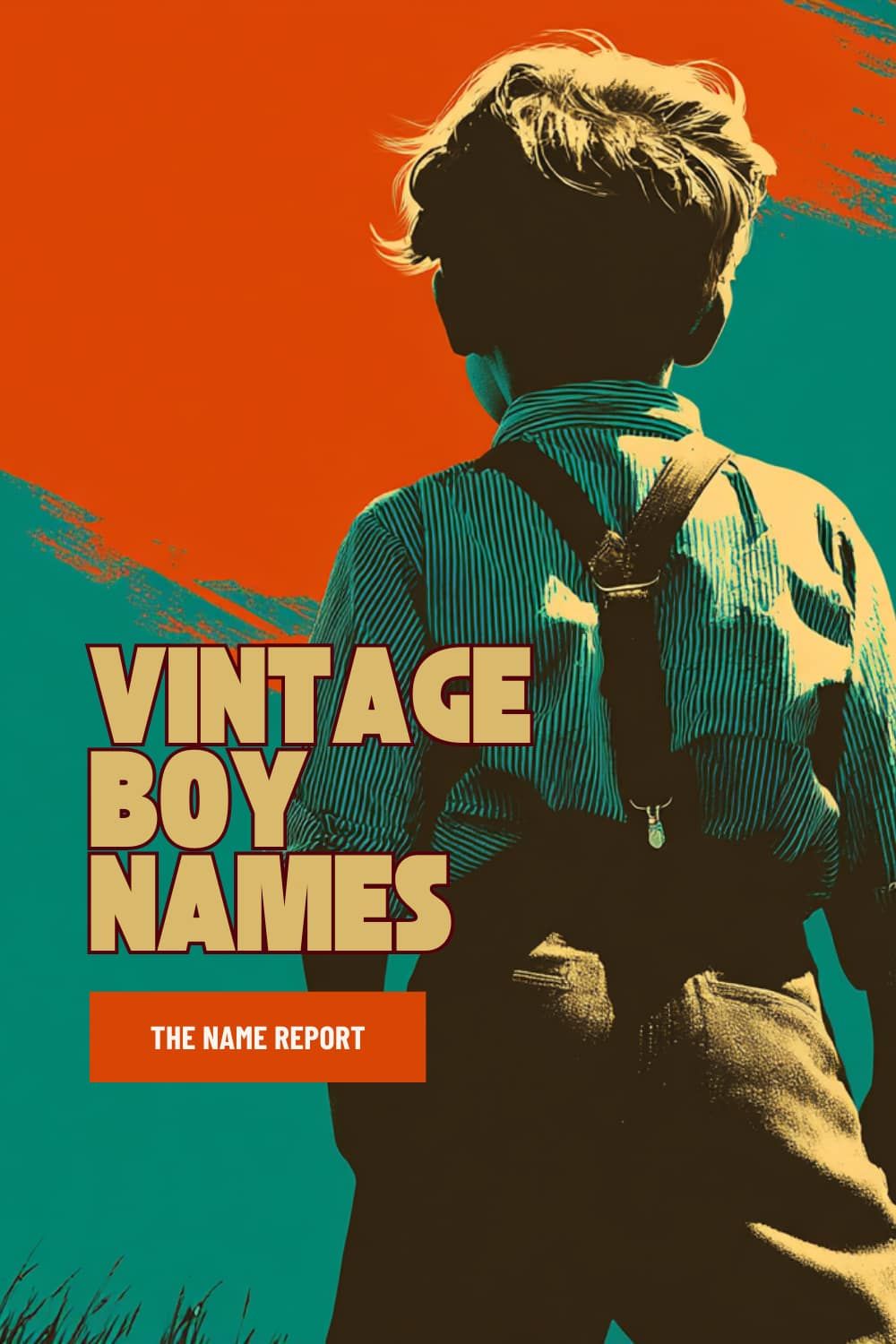
There’s something about a name that sounds like it belongs in a black-and-white photograph. Not costume-y. Not nostalgic in a precious way. Just—undeniably rooted in another era, carrying the weight of people who’ve already worn it, already made it mean something.
Vintage boy names are having a moment precisely because they offer what contemporary culture desperately needs: a sense of continuity. A name that’s been around for a century feels like an anchor. It says: this child is part of something larger than the current trend cycle.
But here’s the thing—vintage doesn’t mean old-fashioned. The names that are trending now are the ones that managed to age beautifully, that never quite fell out of circulation even when they weren’t fashionable, that sound intentional rather than accidental. They’re not your grandmother’s choices because you raided her photo albums. They’re your choices because you understand that time-tested names carry a particular kind of credibility.
What Makes a Name Feel Vintage
The aesthetic of duration. Vintage names feel like they’ve earned their place in the world through sheer staying power. They’re not flashy. They don’t demand attention. They just exist, solid and real, like furniture that’s been in families for generations. This is different from names that actually age well—it’s specifically about names that feel like they’ve already aged, that carry the patina of time.
The sound of another era. There’s a sonic quality to vintage names. They often have formal first syllables, clear enunciation, a kind of architectural solidity. They sound like they were named by people who believed names mattered, who weren’t trying to be cute or clever. Say Theodore. Say Edmund. Say Albert. These are names that sound intentional.
The meaning of substance. Many vintage names have etymologies rooted in qualities people actually valued: strength, wisdom, protection, craftsmanship. They’re not names about being special or unique. They’re names about being solid. Names that have philosophical weight often have this quality.
The names trending right now are the ones that check all three boxes: they feel rooted in time, they sound like names people took seriously, and they mean something substantial.
Vintage Boy Names With Real Staying Power
The 1920s-1930s Renaissance (The Golden Age of Intentional Naming)
Theodore (THEE-oh-dor) — Greek, meaning “gift of God,” and it’s having a massive comeback. There’s something about Theodore that feels like an era—think Theodore Roosevelt, but also your great-grandfather who built things. It’s got the 100-year rule working in its favor (peaked in the 1920s, now sounding fresh again). The nickname Ted softens it for childhood; Theodore carries authority into adulthood. Names with built-in nicknames do this beautifully.
Jasper (JAS-pur) — Persian, meaning “treasurer,” and it’s risen from obscurity into the top choices for parents seeking vintage sophistication. Jasper sounds like someone who pays attention, who notices details, who cares about craft. It’s got a gentle quality that makes it accessible, but the formality of the full name gives it weight. This is the sweet spot of vintage—accessible but serious.
Edmund (ED-mund) — Old English, meaning “prosperous protector,” and it’s unmistakably vintage. There’s a literary quality (C.S. Lewis’s Narnia, Edmund Burke the philosopher), which gives it intellectual credentials. It sounds like someone who will probably be thoughtful and grounded.
Arthur (AR-thur) — Celtic, associated with King Arthur, meaning “bear.” Arthur has been continuously used for over a century, which gives it staying power that few names have. It’s been the name of kings and scholars and regular people, which means it carries authority without pretension. Names that feel like old money often share this quality.
Walter (WAWL-ter) — German, meaning “ruler of the army,” and it’s the quintessential vintage name making a comeback. It sounds like someone from another era—think Walter Matthau or any number of mid-century intellectuals. The formality of the full name, the solidity of the sound, makes it feel intentional rather than nostalgic.
Henry (HEN-ree) — Old German, meaning “estate ruler,” and it’s become wildly popular precisely because it manages to sound both formal and approachable. There’s a literary quality (Henry James), a historical weight (every English king named Henry), and a friendliness (Hank as nickname). Popular baby names from the 1950s include Henry, which means it’s got that particular vintage quality of being “evergreen but somehow retro.”
Everett (EV-er-et) — English, meaning “brave boar,” and it sounds like a Victorian naturalist or a thoughtful composer. There’s something about Everett that feels rooted in a particular era—not ostentatiously so, just solidly. It’s got the architectural quality of names that makes them feel intentional.
Cyrus (SY-rus) — Persian, meaning “sun” or “throne.” Cyrus sounds unmistakably vintage—think Cyrus McCormick or any number of 19th-century figures. It’s got a formal quality that makes it feel distinguished without being pretentious. The sound is solid, the meaning is substantial.
Leonard (LEE-o-nard) — Latin, meaning “brave lion,” and it’s the kind of vintage name that never quite fell out of favor but is definitely having a moment. Leonard Cohen, Leonard Bernstein, Leonard Nimoy—the name carries intellectual weight. It sounds like someone who thinks deeply about things.
The Formally Accessible (Vintage Sound, Contemporary Feel)
Oscar (AHS-car) — Old Norse, meaning “spear of the gods,” and it’s risen dramatically in popularity because it manages to sound both vintage and contemporary. There’s a literary quality (Oscar Wilde), a creative association, but the informality of the sound makes it feel approachable. This is vintage that doesn’t feel costume-y.
August (AW-gust) — Latin, meaning “majestic” or “venerable.” August has that particular quality of sounding like it belongs in another era—think August Strindberg or any number of Central European intellectuals—but it’s also got a warmth that makes it accessible. It’s formal without being stuffy.
Vincent (VIN-sent) — Latin, meaning “conqueror.” Vincent has that intellectual, artistic quality—think Van Gogh—that makes it feel rooted in a particular aesthetic moment. It’s got literary weight without being precious.
Miles (MYLES) — Latin, meaning “soldier,” but Miles has become entirely dissociated from military connotation. It sounds like someone intelligent and thoughtful. There’s a vintage quality to it that feels intentional—the kind of name a parent chooses specifically because it sounds like it belongs in another era.
George (JORE-j) — Greek, meaning “farmer” or “earth-worker,” and it’s unmistakably vintage. George has been used continuously for centuries, which gives it a particular kind of credibility. It sounds formal without being pretentious. There’s something about George that suggests someone steady and reliable.
Elliot (EL-ee-ut) — English, from the biblical Elijah. Elliot has that particular quality of sounding vintage while feeling contemporary. It’s got a literary softness (T.S. Eliot, the poet) that gives it intellectual weight. The double-t spelling is a contemporary touch on a classically vintage name.
The Time-Folded (Sounds Old, Feels Universal)
Otis (OH-tis) — Old German, meaning “wealthy,” and it’s the kind of vintage name that sounds like it belongs in another era but doesn’t feel costume-y. There’s a blues quality to it (Otis Redding), a particular vintage charm. It’s got the sonic luxury of names that sound like they mean something.
Silas (SY-lus) — Latin, meaning “from the forest.” We’ve seen Silas before in the dark masculine and soft masculine lists, but it belongs here too—it’s genuinely one of the most versatile vintage names. It sounds like it belongs in another era. It carries weight. It’s accessible without being diminished. This is the platonic ideal of vintage naming.
Atlas (AT-lus) — Greek, from the mythological figure, meaning “to endure.” Atlas is vintage in the sense that it feels like a name from another era, but it’s also got a contemporary mythological quality. It’s substantial without being heavy.
Amos (AY-mus) — Hebrew, meaning “carried by God.” Amos is the kind of vintage name that sounds unmistakably old—there’s something about the double-a sound that feels rooted in time. It’s formal without being stuffy. It suggests someone thoughtful and grounded. Frontier names often have this quality.
Orson (OR-sun) — Latin, meaning “bear-like,” and it’s got a particular vintage charm. It sounds like it belongs in another era—think Orson Welles—but it’s also got a contemporary appeal for parents seeking something distinctive. The double-syllable formality gives it weight.
The Deliberately Anachronistic (Names From Another Era, Intentionally)
Thaddeus (THAD-ee-us) — Aramaic, meaning “heart,” and it’s unmistakably vintage. It’s the kind of formal, old-fashioned name that contemporary parents are choosing specifically to signal: this child is rooted in something older than the algorithm.
Magnus (MAG-nus) — Latin, meaning “great.” Magnus is the kind of vintage name that sounds undeniably from another era—Scandinavian history, royal lineage, intellectual weight. It’s got a formality that contemporary culture finds refreshing.
Percival (PER-suh-vil) — Old French, meaning “pierce the veil,” from Arthurian legend. Percival is aggressively vintage—it’s the kind of name you choose specifically because you want something that sounds like it belongs in a different era. It’s got literary weight (T.H. White, Arthurian legend), which makes it feel intentional rather than costume-y.
Reginald (REJ-uh-nald) — Latin, meaning “ruler’s advisor.” Reginald is the quintessential vintage name—it’s formal, it’s old, it carries authority. It’s the kind of name that contemporary parents are choosing to signal: I understand that vintage names carry credibility that trendy ones don’t.
Barnaby (BAR-nuh-bee) — Aramaic, meaning “son of encouragement,” and it’s got a particular Victorian charm. It’s formal without being stuffy, vintage without being costume-y. There’s something about Barnaby that feels like a name from a Dickens novel that also works for a contemporary child.
Why Vintage Matters: Naming Into Continuity
Here’s what’s actually happening when you choose a vintage boy name: you’re naming your son into a lineage. Not necessarily a family lineage (though it often is), but a cultural one. You’re saying: my child is part of a story that’s been unfolding for generations. These names were chosen by people who took naming seriously. I’m continuing that tradition.
That’s not nostalgic. That’s philosophical.
Vintage names carry a particular kind of cultural capital that brand-new names don’t. They’re familiar enough that they feel comfortable, but distinctive enough that they don’t feel like you’re naming your child after every other kid in the class. They sound intentional. They sound credible. They sound like names that have been tested by time and proven to work.
These names pair beautifully with the 100-year rule if you want to understand the timing of vintage naming. They connect to popular baby names from specific eras if you want historical context. And they work alongside names that age well if you’re specifically looking for names with staying power.
The vintage names that are trending now are the ones that managed to sound intentional rather than accidental. They’re the names parents are choosing specifically because they understand that names that feel like old money carry a particular kind of credibility. That vintage isn’t about being stuck in the past—it’s about understanding that some things have stood the test of time because they’re actually good.
If your gut is drawn to names that sound like they belong in another era, to boys who will probably have a particular kind of solid credibility just from their name alone, to the understanding that names that signal values—and the value here is continuity, intention, and respect for what came before—trust that instinct. Naming toward vintage is naming toward a kind of timeless sophistication. There’s everything right about it.
Get Your Personalized Name Report
Want names curated specifically to your aesthetic and values? Ready to move beyond the lists and into personalized guidance? Get your Personalized Name Report at https://app.thenamereport.com/ and discover names that actually match your family’s philosophy—whether that’s honoring the past, embracing the present, or folding both together.