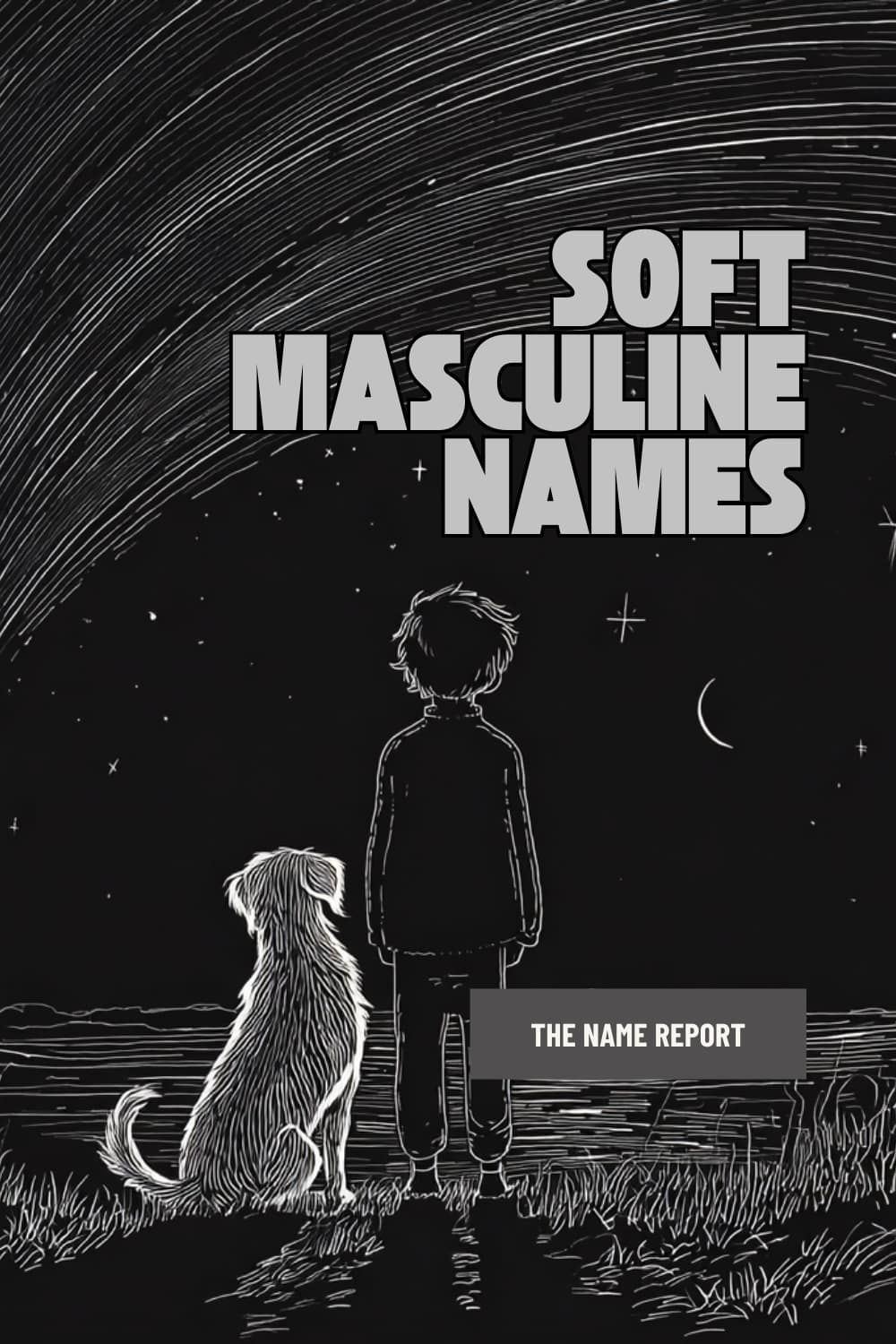
The intensity trend is real. Sharpness, darkness, and gravity have their place. But so does softness. Not the softness of weakness or cuteness, but the softness of emotional accessibility—names that give a boy permission to feel deeply, to be gentle with himself and others, to understand that vulnerability is not a failure of strength but its most sophisticated expression.
The soft masculinity movement has fundamentally shifted how we think about raising boys. And it’s reshaping how we name them too.
Soft masculine names aren’t about denying complexity. They’re about celebrating a particular kind of complexity: the one that leads to emotional intelligence, resilience through openness, and the understanding that a man can be both powerful and tender. These are names for boys who will probably cry at movies, who will ask for help without shame, who will see gentleness as a feature of their character rather than a flaw in it.
This is not softness as opposition to strength. This is softness as a dimension of full humanity.
What Soft Masculine Actually Means
When we talk about soft masculine names, we’re talking about three intersecting qualities:
Aesthetic accessibility. These are names that feel welcoming—they don’t demand or intimidate. They’re often vowel-forward or have liquid consonants that flow rather than cut. They exist in open space rather than shadow. Liam, Felix, Kai, Noah—these names sound like someone who is present and approachable. They suggest emotional availability without performing it. The aesthetic is one of warmth, not distance.
Meaning rooted in values we want boys to carry. Soft masculine names often have etymologies connected to light, growth, peace, hope, or emotional concepts. They’re not names about power-over but about power-with. A name that means “light” or “healing” or “peaceful warrior” carries a philosophical message: your strength is expressed through your capacity to nurture, to help, to grow. These are names about contribution rather than conquest.
Sound that invites rather than demands. Phonetically, soft masculine names tend toward vowel sounds, flowing consonants, and syllabic openness. Say Ezra. Say Jasper. Say August. These names don’t close. They breathe. They have a melodic quality that suggests someone who listens before they speak, who holds space for others’ emotions because they honor their own. The sound itself is an invitation to emotional presence.
The combination of these three things—how they feel, what they mean, how they sound—creates a kind of naming permission. These are names for boys who will probably understand that crying is information, not weakness. That asking for help is strength. That gentleness is one of the most powerful ways to move through the world.
Soft Masculine Names With Real Substance
The Emotionally Rooted (Meanings Connected to Light, Growth, Peace, Healing)
Liam (LEE-um) — Irish, meaning “strong-willed warrior,” but the sound is pure gentleness. There’s something about Liam that feels like warmth. It’s become wildly popular precisely because parents recognize that a name can hold both strength and softness simultaneously. The meaning is about will; the sound is about presence.
Felix (FEE-liks) — Latin, meaning “happy” or “fortunate,” and it sounds like someone who radiates contentment. There’s an intellectual quality here too (think Felix Mendelssohn, the composer), so it’s not saccharine. It’s joyful with substance. Names that mean joy without being performed.
August (AW-gust) — Latin, meaning “majestic” or “venerable,” but August sounds like someone thoughtful and warm. It’s got vintage quality (the month, the name), which gives it gravitas. But the vowel-forward sound makes it approachable. Soft power, basically.
Noah (NO-uh) — Hebrew, meaning “rest” or “comfort,” and the name itself embodies that. It’s simple without being simplistic. It’s familiar without being diminished. There’s something about Noah that feels like home. Names that mean home carry this quality of emotional safety.
Kai (KY) — Hawaiian/Japanese, meaning “sea,” but it’s become something more universal. Single syllable, vowel-forward, accessible across languages. Kai suggests fluidity, adaptability, the understanding that strength includes flexibility. Water names for boys often have this soft-strong quality.
Jasper (JAS-pur) — Persian, meaning “treasurer,” but Jasper sounds like kindness. It’s got a vintage quality that feels gentle rather than austere. There’s something about this name that suggests someone who notices things, who pays attention, who cares about details. Names that feel like used bookstores often have this tender quality.
Rowan (ROW-un) — Scottish, from the rowan tree, meaning “little red-haired one.” There’s nature embedded here, but softly—not conquest of nature but participation in it. Tree names for boys often carry this gentle-but-grounded energy. Rowan is both.
Miles (MYLES) — Latin, meaning “soldier,” but the name has become entirely dissociated from militarism. It sounds like someone intelligent and kind. There’s a musicality to it (Miles Davis) that makes it feel approachable. Literary names with this quality work beautifully for soft masculinity.
Eli (EL-eye) — Hebrew, meaning “ascended” or referring to the biblical priest Eli. It’s short, direct, but the vowel-heavy sound makes it feel open. Eli is both strong and accessible. Short names don’t have to be punchy—Eli proves that.
Julian (JOO-shun) — Latin, from the Roman family name Julius, meaning “youthful.” But Julian carries an intellectual quality (Julian Barnes, the novelist) that makes it feel sophisticated rather than young. It’s got flowing vowels that make it sound kind. Names that age well while staying warm.
The Vowel-Forward (Acoustically Open, Melodically Accessible)
Asher (ASH-er) — Hebrew, meaning “happy” or “blessed,” and the sound is pure accessibility. Vowels frame the whole thing. Asher doesn’t demand; it invites. It’s become popular among parents who want something substantial but emotionally open. Names that mean blessing often have this quality.
Ezra (EZ-rah) — We know this one from the dark masculine list, but it lives beautifully here too. The meaning is spiritual; the sound is open. Ezra works for boys who will grow into either intensity or softness, which is the whole point—it’s a name that contains multitudes.
Owen (OH-en) — Welsh, meaning “young warrior,” but Owen sounds like gentleness. The vowel-forward sound, the flowing quality—it’s a name that suggests someone who will listen. There’s strength here, but it’s quiet strength. Names that mean strength but whisper it.
Arden (AR-den) — English, meaning “eagle valley” or from the Forest of Arden in Shakespeare’s As You Like It. The vowel-forward sound makes it feel open, but it’s got literary depth. Landscape names with this quality work beautifully for soft boys.
River (RIV-er) — We touched on this in the dark list, but River embodies soft masculinity too. Fluid, adaptive, constantly moving. It’s a name that suggests someone who goes with the flow without losing direction. Water names carry this adaptive softness.
Elio (EL-ee-oh) — Italian/Spanish, meaning “sun,” but it sounds like someone warm and approachable. Vowel-heavy, melodic, it’s got a European sophistication that feels accessible rather than distant. This is the soft version of celestial naming.
Ewan (YOO-un) — Scottish, a form of John, but it sounds like someone gentle and thoughtful. The vowel-forward quality makes it feel warm. It’s got Scottish rootedness without harshness. Scottish names for boys often have this quality.
Adrian (AY-dree-un) — Latin, meaning “from Hadria,” but Adrian sounds like someone contemplative and kind. The flowing vowels, the length, the intellectual quality—it suggests someone who thinks before speaking. Names with texture that feel warm rather than sharp.
The Growth-Oriented (Meanings About Development, Potential, Becoming)
Leo (LAY-oh) — Latin, meaning “lion,” but we’ve reclaimed this for softness. The roaring lion of strength can also be the lion who naps in the sun, who is content with his place in the world. Names like Leo have become gender-neutral enough to encompass both strength and gentleness.
Silas (SY-lus) — We know this from the dark list too, but Silas carries softness in a different way. It means “from the forest,” suggesting rootedness, growth, stillness. A name for a boy who will probably be comfortable in silence, who understands nature as teacher. Forest names hold this quality.
Oliver (AHL-i-ver) — Latin, meaning “olive tree,” suggesting peace, wisdom, bearing fruit. Oliver has become wildly popular because it holds both accessibility and substance. It’s warm without being cute. Botanical names for boys often do this beautifully.
Theo (THEE-oh) — Greek, short for Theodore, meaning “gift of God.” But Theo as a standalone is soft and intellectual. It’s got a thoughtful quality, like someone who observes the world carefully. Short forms of longer names often carry this gentle-but-substantial energy.
Iris (EYE-ris) — Greek, the goddess of the rainbow and the messenger of the gods. Traditionally feminine, but increasingly used for boys, especially in families wanting to embrace full emotional spectrum. Iris carries color, hope, communication—soft values. Gender-neutral names that transcend category.
Sage (SAYJ) — We know this from the dark list, but Sage embodies soft masculinity through wisdom and balance. It’s a name for a boy who will probably be the person others come to for advice. Names that signal values—here, the value is understanding.
Gender-Neutral Soft Names That Create Space for Feeling
Alex (AL-eks) — Greek, meaning “defender,” but Alex is pure accessibility. It works across every context, every culture, every gender. It’s a name that says: I don’t need you to perform anything. Just be yourself.
Jordan (JOR-dun) — Hebrew, meaning “descending,” from the river. It’s got flow, adaptability, and accessibility. A name for someone who will probably be comfortable in uncertainty. Water-based names carry this quality.
Casey (KAY-see) — Irish, meaning “brave” or “vigilant,” but the sound is pure gentleness. Vowel-forward, approachable, it’s a name for a boy who might be observant and kind simultaneously. Gender-neutral names that work in the boardroom often have this soft strength.
Cameron (KAM-er-un) — Scottish, meaning “bent nose,” but that’s not the point. Cameron sounds like someone warm and open. The vowel structure, the flowing quality—it’s a name for a boy who will probably be good at holding space for others’ emotions.
Morgan (MOR-gun) — Welsh, but Morgan has become thoroughly gender-neutral. It carries mystery but also accessibility. It’s a name that suggests someone intelligent and feeling. Gender-neutral names with philosophical weight.
Riley (RY-lee) — Irish, but Riley is vowel-forward and warm. It’s got a friendliness that makes it feel approachable. A name for a boy who will probably be easy to be around. Old-school names that went neutral.
Why This Matters: Naming Toward Emotional Fullness
Here’s what’s actually happening when you choose a soft masculine name: you’re naming your son toward the understanding that his full humanity includes feelings, vulnerability, gentleness, and the capacity to be moved by beauty. You’re saying: I want you to feel. I want you to be tender with yourself and others. I want you to understand that your sensitivity is where your strength lives.
That’s radical. In a culture that’s spent centuries teaching boys to shut down their emotions, that’s genuinely revolutionary.
Soft masculine names don’t make a child soft. They just say: I won’t make you apologize for your feelings. I won’t teach you that kindness is weakness. I will raise you believing that your emotional range is your superpower.
These names pair beautifully with the sibling name test if you’re building a family where emotional intelligence is a stated value. They work alongside names that mean peace or names that mean hope if you’re creating a cohesive family philosophy. And yes, they work beautifully as the counterpoint to dark masculine names—the tension between them creates a family narrative about complexity, not conformity.
A soft masculine name is not a rejection of strength. It’s the ultimate assertion of it: the understanding that real power includes vulnerability, that the strongest thing a man can do is feel deeply and express it without shame, that gentleness is not the absence of strength but its most mature expression.
If your gut is drawn to names that feel warm, to boys who will probably be comfortable with their own feelings, to emotional accessibility as a value—trust that instinct. Naming toward softness is naming toward emotional wisdom. There’s everything right about it.
And if you’re contrasting this with dark masculine names in your family, you’re doing something beautiful: you’re showing your children that complexity includes both intensity and tenderness, that a full human contains multitudes in every direction.
Get Your Personalized Name Report
Want names curated specifically to your aesthetic and values? Ready to move beyond the lists and into personalized guidance? Get your Personalized Name Report at https://app.thenamereport.com/ and discover names that actually match your family’s philosophy—whether that philosophy celebrates intensity, softness, or the beautiful complexity of both.