The soft masculinity trend is real, and it’s beautiful. Gentleness is a feature, not a bug. And so is intensity. Somewhere in all this talk about raising boys with emotional intelligence and vulnerability, we’ve forgotten that sharpness, gravity, and darkness are equally valuable qualities—not failures of softness, but essential dimensions of human complexity.
Some parents are looking for names that command attention. Names that don’t apologize. Names that say: this child will contain multitudes, and many of them will be profound.
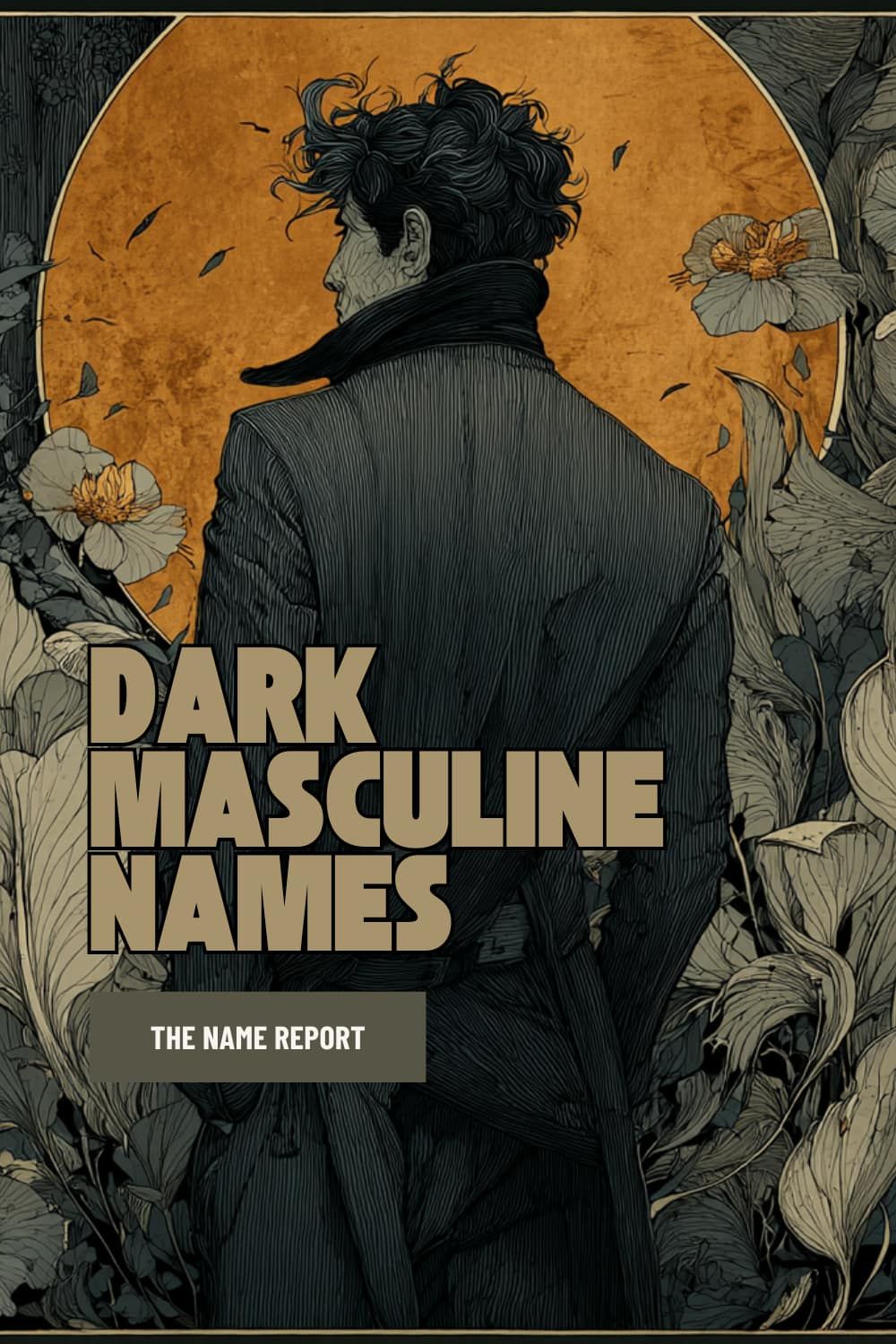
Dark masculine names are intentional. They’re aesthetic. They’re the names you choose when you understand that complexity is the fullest expression of humanity, and that a name can honor all the dimensions a person might become.
What Dark Masculine Actually Means
When we talk about dark masculine names, we’re talking about three intersecting qualities:
Aesthetic darkness. These are names that feel like they belong in shadow—they carry weight, mystery, a kind of knowing that comes from having seen something real. They’re not cheerful. They’re not meant to be. Caspian, Silas, Ezra, Orson—these names don’t light up a room. They darken it productively, like a forest where something is growing in the shade. This is distinct from the theatrical darkness of dark romantasy names—dark masculine is more philosophical than performative.
Meaning with substance. Dark masculine names often have etymologies rooted in things that matter: wilderness, struggle, transformation, the spiritual unknown. They’re not names about being good. They’re names about being real. A name that means “from the forest” or “God hears” or “God is my help” carries a different philosophical weight than a name that means “joyful” or “beloved.” Both are fine. But they’re not the same thing. These are the kinds of names that have philosophical weight—they mean something beyond the sound.
Sound that doesn’t soften. Phonetically, dark masculine names tend toward hard consonants, short syllables, or that particular quality of sounding older than they are. Say Dashiell out loud. Say Casper. Say Dorian. These names don’t diminish. They don’t get cute. They age up, not down. The sonic architecture matters.
The combination of these three things—how they feel, what they mean, how they sound—creates a kind of naming gravity. These are names for boys who will probably read too much, feel too deeply, and have strong opinions about things that matter. Names that signal values—and the value here is complexity, not convenience.
Dark Masculine Names That Go Deep
The Literally Dark (Names Rooted in Shadow, Night, Mystery)
Caspian (KAS-pee-un) — Named after the Caspian Sea, but it carries the weight of water, depth, and something unknowable. It’s got a literary shimmer (think C.S. Lewis) but it’s grounded in landscape names and place. The -ian ending gives it sophistication without preciousness.
Dorian (DOR-ee-un) — Ancient Greek, connected to the Dorian people, but most people think of Oscar Wilde’s The Picture of Dorian Gray—the portrait that ages while he doesn’t. It’s beautiful and deeply unsettling. That duality is the name. Victorian Gothic at its finest.
Silas (SY-lus) — Latin origin, meaning “from the forest.” There’s something about forest names for boys that feels architectural—they’re solid, they don’t move. Silas has that quality. It’s also got biblical weight without being preachy. (See: Silas in Acts, but also: Silas Marner, the weaver who lived alone and trusted no one.)
Nero (NAIR-oh) — Latin, meaning “stern” or “strong,” and yes, there’s the historical emperor baggage, but that’s part of the point. This name doesn’t flinch from complexity. It’s got a one-syllable punch and a kind of dangerous elegance. Names that mean strength but don’t announce it.
Orson (OR-sun) — Latin origin, meaning “bear-like,” and it sounds like what it means. Heavy, grounded, a little feral. Orson Welles gave it intellectual weight, but the name itself is rooted in something primal. Think names with texture—consonant clusters that feel substantial.
Ezra (EZ-rah) — Hebrew, meaning “God is my helper” or “God is my strength,” but here’s the thing: Ezra has become the name of melancholic artists. It’s biblical without being light. (Ezra Koenig, Ezra Miller, Ezra Pound.) There’s something about this name that attracts complicated people. Literary names with real substance.
Poe (POH) — Single syllable, literary to its core (Edgar Allan Poe), and it’s started trending precisely because parents want something that signals darkness without being performed. It’s honest in its darkness. One of the rare single-syllable masculine names that actually age well.
The Phonetically Sharp (Hard Consonants, Syllabic Punch)
Dashiell (dash-EEL) — Possibly Old English/French, but forever associated with Dashiell Hammett, the noir writer. The -ell ending is unusual for masculine names, which makes it distinctive. Say it out loud: it’s got texture. Hard consonants, then a slide. It sounds like a decision. Names that feel like used bookstores—moody, intellectual, lived-in.
Gatsby (GATS-bee) — A surname-as-first-name situation, but it carries all of Fitzgerald’s ambition and moral complexity. It’s theatrical but grounded in literature. (And yes, you’d probably use it as a middle name unless you’re really committed.)
Knox (NOCKS) — Scottish, meaning “round-topped hill,” but phonetically it’s all hard edges. One syllable, impossible to soften. It’s the name of someone who doesn’t negotiate.
Thorne (THORN) — Nature name, but the thorny kind—the part that draws blood. It’s got a literary quality (especially if you’re thinking Hawthorne), and it refuses to be cute. Part of the nature-inspired boys’ names that have genuine edge.
Kray (KRAY) — Scandinavian, meaning “sharp” or “strong,” and the name itself performs what it means. It’s punchy, memorable, and it doesn’t require explaining. Names that mean strength but actually announce it.
Raze (RAYZ) — Not quite a traditional name, but it’s trending as a name meaning “destruction” or “to demolish.” It’s bold. It’s intentional. It’s the kind of name that signals: this parent isn’t afraid of intensity. Controversial naming as philosophical statement.
Jax (JAKS) — Short for Jackson, but it’s become its own thing. Hard x sound, refuses to be a diminutive. Modern but sounds older—that particular time-folded quality of the best masculine names.
The Aesthetically Intense (Cultural Weight, Complexity, Knowing)
Orion (oh-RY-un) — Greek mythology, the hunter, the constellation. There’s something about Orion that feels older than any of us. It’s got spiritual weight without being religious. It suggests someone who understands their place in something larger. Names from mythology carry that particular gravity.
Ishmael (ISH-may-ul) — Hebrew, meaning “God will hear.” Biblical, but also the narrator of Moby Dick—the one who survives, who tells the story, who observes from the margins. There’s something about this name that suggests wisdom earned through displacement. Literary references matter here.
Casper (KAS-per) — Persian, meaning “treasurer,” but it carries the weight of being a “friendly ghost” and a name that’s old enough to sound contemporary again. It’s got a melancholic quality—like someone who’s present but slightly apart. Names that age well in unexpected ways.
Theobald (THEE-oh-bald) — Old Germanic, meaning “people’s prince,” but it sounds like a Victorian scholar. It’s dramatic without being theatrical. It’s the name of someone who thinks deeply about things. Part of the Victorian Gothic renaissance.
Lysander (ly-SAN-der) — Greek, meaning “liberator,” but it sounds like a Renaissance poet or a Shakespearean character (because it is one, in A Midsummer Night’s Dream). It’s got length and complexity. It doesn’t fit on a baseball uniform and that’s part of the appeal. Names with texture and architectural substance.
Cain (KANE) — Biblical, the first murderer, which means this name carries actual moral weight. It’s controversial, which is exactly why some parents choose it—to signal that they’re not afraid of darkness, that complexity isn’t something to be solved. This is cross-cultural naming ethics in action—choosing meaning over comfort.
Malachi (MAL-uh-kye) — Hebrew, meaning “my messenger” or “my angel,” but Malachi sounds dark. The hard k sound, the length, the slight unfamiliarity even though it’s biblical. It’s got a prophetic quality. Biblical names that feel modern.
Soren (SOR-en) — Scandinavian, derived from the Roman name Severus, meaning “stern” or “serious.” It’s got an intellectual quality—philosophers are named Soren. People who think about suffering and meaning are named Soren. The New Nordic names that haven’t hit the mainstream yet.
Everett (EV-er-et) — English, meaning “brave boar,” but it sounds like a Victorian naturalist or a melancholic composer. It’s got a literary quality that makes it feel older than it is. It suggests someone thoughtful, slightly removed. Names that feel like brutalist architecture—solid, purposeful, unapologetic.
Gender-Neutral Dark Names That Still Read Masculine in These Contexts
Morgan (MOR-gun) — Welsh, meaning “sea-bright,” but it carries the weight of Morgan le Fay from Arthurian legend—the witch, the complicated one, the one with power and shadow. It’s got mystery built in. Gender-neutral names that work in the boardroom and stay complex.
River (RIV-er) — Obviously water-based, but there’s something about River that feels like movement, constant change, potentially destructive force. It’s got a dark romanticism. Gender-neutral names with philosophical weight.
Ash (ASH) — Single syllable, associated with fire and what remains after. It’s sharp, minimal, and it carries a kind of melancholy that feels intentional. One of the short names with serious heft.
Vale (VALE) — English, meaning “valley,” but it sounds like loss. There’s something about the sound that feels like something missing, something in shadow. Landscape names with emotional depth.
Sage (SAYJ) — Associated with wisdom, yes, but also with the plant that’s used to cleanse spaces of negative energy. It’s got a spiritual darkness—the kind that understands that shadow and light are both necessary. Names that signal values—in this case, balance and intention.
Why This Matters: Naming Toward Complexity
Here’s what’s actually happening when you choose a dark masculine name: you’re naming your son toward the understanding that he contains multitudes, and some of the most important ones might be serious, intense, complex, or profound. You’re saying: I expect you to be fully human. I expect you to have depth. I expect you to matter.
That’s radical generosity.
The soft masculinity movement has been genuinely important—it’s given boys permission to feel, to be vulnerable, to express tenderness without shame. And intensity, darkness, complexity, and gravity are equally human qualities worth naming toward. Some boys will grow into names that whisper. Others will grow into names that command attention, that refuse softness, that suggest depth from the moment you say them aloud.
These names pair beautifully with dark academia names if you’re looking for that literary, intellectual intensity. They also work alongside witchy names if you’re drawn to the mystical side of darkness, or fairy tale villain names if you want names that embrace moral complexity. If you’re building a sibling set with contrast, you might pair a dark masculine name with something lighter—the tension between them actually strengthens both. (See: the sibling name test for how to make that work.)
For parents drawn to these names: a dark name will signal that you understand your child as a complete human, not a mascot for your own emotional journey. A name like Silas or Caspian or Dorian says: I see you as you are. I’m prepared for your complexity. I honor the full range of who you might become.
The most sophisticated thing a parent can do is name their child as they actually are, not as they hope them to be. If your gut is drawn to intensity, to names that command attention, to boys who will probably have rich interior lives—trust that instinct. Naming toward darkness is naming toward humanity. There’s everything right about it.
And if you’re curious about the opposite end of the spectrum, we’ve got soft & strong gender-neutral names and old-school names that went neutral for the parents who are building something intentionally balanced. But if you’re here for the darkness, you’re not alone. And your instinct is sound.
Get Your Personalized Name Report
Want names curated specifically to your aesthetic and values? Ready to move beyond the lists and into personalized guidance? Get your Personalized Name Report at https://app.thenamereport.com/ and discover names that actually match your family’s philosophy—whether that philosophy is dark, light, or intentionally paradoxical.