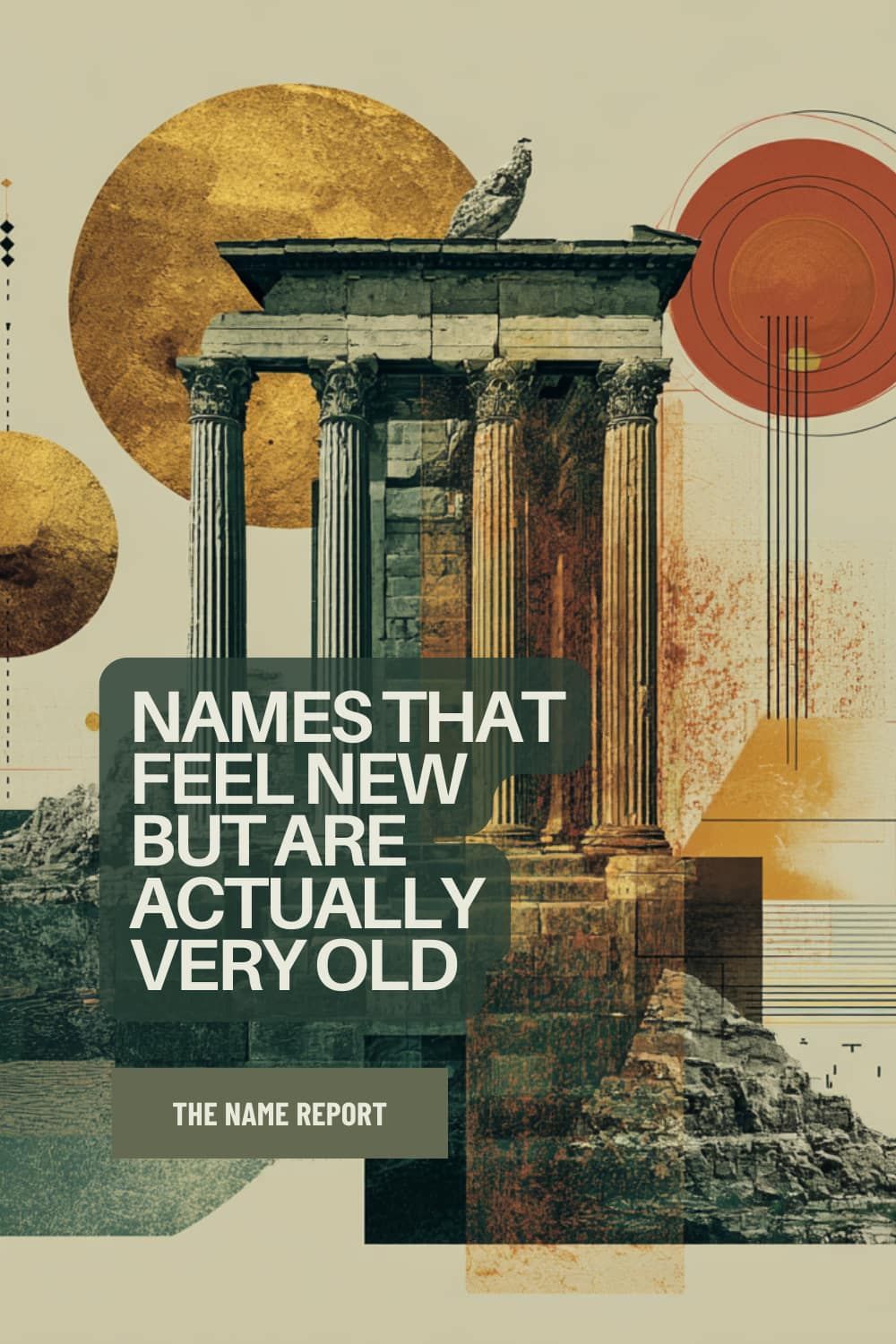
There’s a particular kind of deception happening in contemporary naming. Some names feel utterly modern, like they were invented yesterday by someone on TikTok. They sound fresh and original and distinctly 2025. And then you discover they’re actually centuries old. They’ve been carried by queens and saints and literary characters. They survived wars and fashion changes and complete cultural shifts.
These names have done the work. They’ve endured. They just happen to sound like they haven’t.
This is the inverse of the previous problem. You thought you were choosing something vintage when actually you were choosing something ancient. You thought you were picking a contemporary invention when actually you were reaching into history and pulling something out that happens to sound current.
These are the names that have been through everything and still sound like tomorrow.
Why Some Old Names Feel New
Names feel new when they:
- Have been dormant (not used much for decades) and then resurface
- Sound phonetically contemporary (lots of soft vowels, modern sound combinations)
- Appear in recent popular culture or literary references
- Appeal to multiple aesthetic categories simultaneously
- Have been reclaimed or reframed by contemporary culture
- Feel botanical or nature-based even when they’re not
- Carry associations with strength or independence that align with contemporary values
When these conditions align, a name that’s been around for centuries can feel like it was invented last week.
The Names That Feel New But Are Ancient
The Ones That Sound Botanical But Are Biblical:
Eden (EE-dun) — Two syllables, sounds contemporary and nature-based. But Eden is literally biblical—the Garden of Eden, the first paradise. It’s been a name since biblical times, dormant for decades, and now resurging because it sounds like a nature name. The newness is an illusion.
Lily (LIL-ee) — Two syllables, obviously botanical, feels contemporary. But Lily is ancient—it appears in literature dating back centuries. It was Victorian. Then dormant. Now resurging because flower names are trending. The oldness is being misremembered as newness.
Rose (ROHZ) — Single syllable, feels simple and contemporary. But Rose is ancient. It’s been a name for centuries. It never left. It just feels new again because short names are having a moment.
Iris (EYE-ris) — Two syllables, feels botanical and contemporary. But Iris is Greek mythology—goddess of the rainbow. It’s ancient. It was Victorian. Then dormant. Now feels new because flower names +mythology is trending.
The Ones That Sound Literary But Are Medieval:
Ariadne (ar-ee-AD-nee) — Four syllables, feels very literary and contemporary. But Ariadne is Greek mythology—the princess who helped Theseus defeat the Minotaur. She’s ancient. Contemporary authors have reclaimed her through mythology retellings, making her feel newly invented. But she’s thousands of years old.
Ophelia (oh-FEEL-yuh) — Four syllables, feels dark and literary. But Ophelia is Shakespeare, which is 400+ years old. She was obscure, then became feminist reclamation in contemporary literature. The reclamation makes her feel new. She’s not.
Isolde (iz-OL-duh) — Three syllables, feels dark and romantic. But Isolde is medieval romance—Tristan and Isolde, one of the oldest love stories in Western literature. She’s extremely old. Contemporary dark academia/romantasy has made her feel new.
Beatrice (BEE-uh-tris) — Three syllables, feels literary and sophisticated. But Beatrice is medieval—Dante’s guide through the underworld, centuries of literary tradition. Vintage revival has made her feel contemporary. She’s profoundly old.
Eleanor (EL-uh-nor) — Three syllables, feels vintage and distinguished. But Eleanor is medieval—Eleanor of Aquitaine, one of the most powerful women of the Middle Ages. She’s over 900 years old. Vintage revival +literary association makes her feel contemporary.
Penelope (puh-NEL-uh-pee) — Four syllables, feels vintage and distinctive. But Penelope is Homer’s Odyssey—one of the oldest stories in Western literature. She’s over 2,700 years old. Bridgerton +vintage revival makes her feel new.
The Ones That Sound Contemporary But Are Medieval/Renaissance:
Aurelia (aw-RAY-lee-uh) — Four syllables, feels soft maximalist and contemporary. But Aurelia is Roman—meaning “golden,” used for centuries. Then dormant. Now resurging as gold naming trends alongsidesoft maximalism. She’s extremely old.
Evangeline (ee-VAN-juh-leen) — Four syllables, feels romantasy and soft maximalist. But Evangeline appears in Longfellow’s 1847 poem—over 175 years old. Contemporary romantasy has made her feel newly invented.
Arabella (ar-uh-BEL-uh) — Four syllables, feels contemporary and soft maximalist. But Arabella appears in Renaissance literature and Regency fiction. She’s centuries old. Contemporary romantasy interest makes her feel new.
Margot (MAR-go) — Two syllables, feels short and substantial. But Margot is French, medieval/Renaissance origin. She’s very old. Contemporary literary +vintage interest makes her feel newly chosen.
The Ones That Sound Like Newly Invented but Are Linguistic Roots:
Nyx (NICKS) — One syllable, feels invented and distinctly contemporary. But Nyx is Greek goddess of night, thousands of years old. BookTok + dark academia interest makes her feel newly created.
Elowen (eh-LOH-wen) — Three syllables, sounds invented and soft maximalist. But Elowen is Cornish—meaning “elm,” with Celtic linguistic roots centuries old. She sounds invented because the name is rare in contemporary use, but it’s drawing from old linguistic traditions.
Sienna (see-EN-uh) — Two syllables, feels like a contemporary invention (like a place name). But Sienna is actually ancient—referring to the reddish-brown earth pigment from Siena, Italy. The name has been around for centuries. Contemporary color/place naming has made it feel new.
Aurora (aw-ROR-uh) — Three syllables, feels contemporary and celestial. But Aurora is Roman goddess of dawn, thousands of years old. Celestial naming trends make her feel contemporary. She’s ancient.
Vesper (VES-pur) — Two syllables, feels invented and dark academia. But Vesper refers to evening prayers in Latin tradition—centuries old. Contemporary dark academia +evening/dusk naming makes her feel newly created.
The Ones That Sound Like Contemporary Inventions But Are Biblical:
Naomi (nay-OH-mee) — Two syllables, feels contemporary and soft. But Naomi is biblical—Ruth’s mother-in-law, a character in one of the oldest texts. She’s ancient. Contemporary meanings naming (Naomi means “pleasantness”) has made her feel newly appreciated.
Leah (LEE-uh) — Two syllables, feels simple and contemporary. But Leah is biblical—Jacob’s wife, one of the matriarchs of Judaism. She’s over 3,000 years old. Contemporary simplicity +short names trends make her feel new.
Dinah (DY-nuh) — Two syllables, feels distinctive and contemporary. But Dinah is biblical—daughter of Jacob and Leah. She’s ancient. Contemporary literary reclamation (through novels retelling her story) makes her feel newly invented.
Miriam (MEER-ee-um) — Three syllables, feels soft and contemporary. But Miriam is biblical—Moses’ sister, a prophet. She’s over 3,000 years old. Contemporary meanings naming (Miriam means “wished-for child” or “beloved of the sea”) makes her feel newly appreciated.
The Male Names That Seem New But Are Ancient:
Silas (SY-lis) — Two syllables, feels contemporary and grounded. But Silas is biblical and classical—Paul’s companion in the New Testament. He’s nearly 2,000 years old. Contemporary frontier +literary interest makes him feel new.
Ezra (EZ-ruh) — Two syllables, feels contemporary and spiritual. But Ezra is biblical prophet, over 2,500 years old. Contemporary names that mean blessing + literary interest (Ezra Pound, etc.) makes him feel newly chosen.
Caspian (KAS-pee-un) — Three syllables, feels contemporary and fantastical. But Caspian is geographical (Caspian Sea) and historical. The name has been around for centuries. Contemporary fantasy + place naming makes him feel newly invented.
Tobias (to-BY-us) — Three syllables, feels contemporary and grounded. But Tobias is biblical and classical. He appears in the Book of Tobit. He’s ancient. Contemporary biblical revival makes him feel new.
The Ones That Feel Like Newly Reclaimed But Are Just Dormant:
Gideon (GID-ee-un) — Three syllables, feels frontier and contemporary. But Gideon is biblical judge, over 3,000 years old. He’s been dormant in contemporary naming but the name is ancient. Frontier +biblical revival makes him feel new.
Simeon (SIM-ee-un) — Three syllables, feels biblical and contemporary. But Simeon is ancient—Jacob’s son, one of the founding patriarchs. Over 3,000 years old. Contemporary biblical interest makes him feel newly chosen.
Amos (AY-mus) — Two syllables, feels frontier and quiet. But Amos is biblical prophet, over 2,700 years old. Frontier revival makes him feel contemporary when he’s profoundly ancient.
Rory (ROR-ee) — Two syllables, feels contemporary and gender-neutral. But Rory is Irish/Scottish, centuries old. Contemporary unisex interest makes him/her feel newly invented.
Why This Matters: The Difference Between New and Newly Appreciated
Here’s the crucial distinction: these names aren’t new. They’re newly appreciated. They’ve been dormant in popular usage, and contemporary culture has brought them back. [They sound fresh because they haven’t been part of the naming mainstream for decades.](/baby-names-to-avoid-in-2026)
This is different from actually inventing a new name. A truly new name would be genuinely unprecedented. Most “new” names are actually phonetic combinations of existing linguistic elements. But the names listed here aren’t that—they’re genuinely ancient, just dormant.
The value of understanding this is:
Longevity. If a name has survived for centuries or millennia, it has structural staying power. It’s proven it can endure. It’s likely to age well. The names that feel new but are old have already passed the endurance test.
Depth. If a name is ancient, it carries layers of history and meaning. Penelope carries 2,700 years of literature. Eleanor carries 900 years of history. This depth is part of what makes them feel substantial.
Resonance. When multiple aesthetics find a name appealing—when dark academia loves it AND romantasy loves it AND vintage lovers love it—that’s often because the name is genuinely compelling, not trendy. Ancient names often appeal across multiple categories because they’ve been refined through centuries of use.
Authenticity. There’s something grounding about knowing your name has genuinely old roots. It’s different from choosing a name you think is new but is actually ancient. The depth is real, even if you didn’t realize it at first.
The Broader Pattern: Why Old Sounds New
This happens because:
- Dormancy creates novelty. A name unused for decades feels new when it resurfaces, even if it’s centuries old.
- Contemporary framing changes perception. When Bridgerton features Penelope, she feels like a contemporary character. Parents don’t think “Homer’s Odyssey—2,700 years old.” They think “Bridgerton character.”
- Aesthetic reclamation makes things feel invented. When dark academia and BookTok reclaim Ophelia, she feels newly created by that community. She’s not. She’s 400 years old.
- Sound changes perception. Names with soft vowels and contemporary phonetics sound modern even when they’re ancient. Aurelia sounds 2025. She’s Roman.
- Class signals shift meaning. When educated, culturally engaged parents choose an old name, it gets coded as contemporary and sophisticated. The name itself hasn’t changed. Its cultural context has.
What This Means For You
If you love a name that feels new, it’s worth discovering its actual roots. You might find:
- Depth you didn’t realize was there. Knowing Penelope is 2,700 years old adds richness to the choice.
- Proof of longevity. If a name has survived centuries, it’s likely to age well.
- Grounding in something real. There’s something stabilizing about discovering your contemporary choice has ancient roots. It’s not a trend. It’s something that has endured.
- Connection to history. You’re not just choosing something current. You’re choosing something that carries centuries of stories and meanings.
This doesn’t make the name better or worse. It just makes it more interesting to understand.
Ready to Discover Name Histories?
If you’re drawn to names that feel fresh but want to understand their deeper roots, the work is exploring what those names actually carry—historically, mythologically, biblically. What older stories do they carry?
Your Personalized Name Report helps you understand the full history and depth behind the names you’re drawn to, so you can choose with complete understanding of what you’re transmitting.
Get Your Personalized Name Report →
Because choosing a name that’s ancient but sounds new is choosing something that has proven it can endure. That’s powerful and worth understanding completely.
Related Reading
- The 100-Year Rule: 1920s Baby Names That Are About to Sound Fresh Again
- Names That Actually Age Well: From Nursery to C-Suite
- The Regency Effect: How Jane Austen and Bridgerton Are Reshaping Baby Names
- Literary Baby Names: Words That Carry Stories
- Dark Academia Baby Names: Moody, Literary, and Sophisticated
- BookTok Baby Names: The Literary References Gen Z Is Naming Their Kids After
- Romantasy Baby Names: Because Your Child Deserves Main Character Energy
- Greek Mythology Baby Names: Gods, Goddesses, and Timeless Stories