There’s a shift happening in how Gen Z envisions beauty, safety, and belonging. Dark academia was about libraries and intellectualism and moral ambiguity in ivy-covered institutions. It was about being smart enough to survive in systems designed to exclude you.
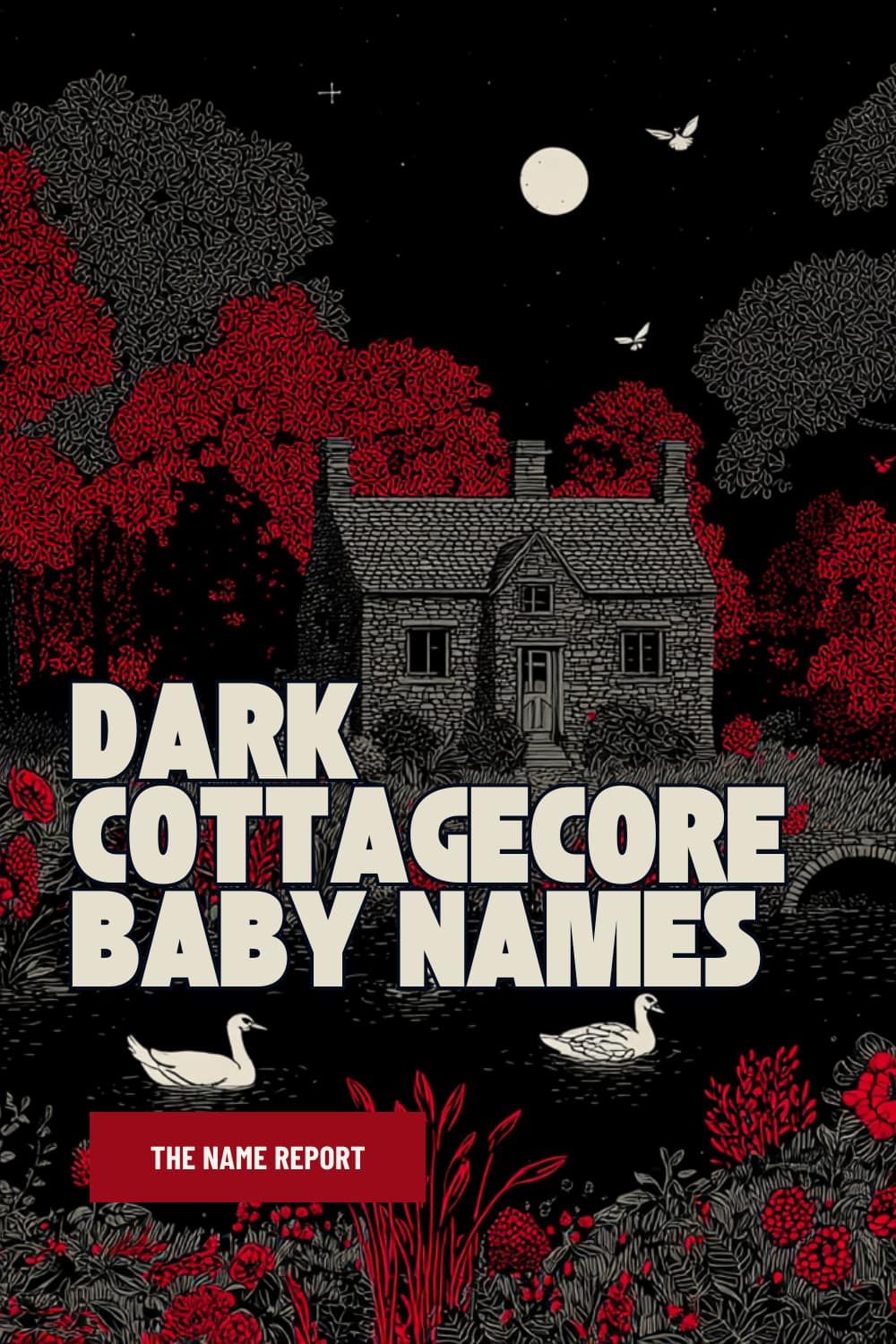
Dark cottagecore is different. It’s darker, quieter, more intimate. It’s about building something small and real and grounded in actual earth. It’s about witchcraft and foraging and knowing how to grow things in soil that’s yours. It’s about finding power not in institutions but in knowledge passed hand-to-hand through generations of women.
And it’s fundamentally changing which names appeal to people.
Dark cottagecore names are the names that carry weight without announcement. They’re herbal and grounded alongside witchy and mysterious. They’re the names of women who know things. Who grow things. Who have secrets and soil under their fingernails.
Dark cottagecore is dark academia’s quieter, older cousin—and it’s winning.
What Is Dark Cottagecore?
Cottagecore in general is an aesthetic about rural life, gardening, traditional domestic crafts, and a romanticized version of agrarian simplicity. It’s escapism from contemporary urban complexity. But dark cottagecore is cottagecore with shadow. It’s not gentle. It’s not innocent. It’s witches and poison gardens and the knowledge that beautiful things can be dangerous.
Dark cottagecore understands that there’s power in rural knowledge. In herbalism that can heal or harm. In understanding seasons and soil and how to grow food. In the traditions that women kept alive through displacement and difficulty. It’s cottagecore with teeth.
For naming purposes, dark cottagecore means: names that sound like they belong to people who live close to land, who understand growing things, who have access to old knowledge. It’s botanical names with a darker edge. It’s witchy names that feel grounded in real tradition rather than fantasy aesthetic. It’s names that suggest both safety and danger.
Why Dark Cottagecore Is Replacing Dark Academia
Dark academia was about being smart enough, literate enough, morally complex enough to survive in systems that weren’t designed for you. It was about understanding power through intellectual superiority.
Dark cottagecore is about something different: rejecting those systems entirely. It’s about building knowledge outside institutions. It’s about recognizing that the power you need isn’t institutional—it’s ecological, it’s relational, it’s grounded in actual survival skills and community.
This shift represents something real about Gen Z values: exhaustion with institutional belonging. A turn toward more localized, grounded, tangible forms of power. A recognition that institutional intelligence isn’t the only intelligence that matters. That knowing how to grow food is as valuable as knowing how to read Latin.
Dark cottagecore names follow this shift. They’re not about sounding educated. They’re about sounding rooted. They’re names that suggest you belong to the earth, to tradition, to generations of knowledge passed through soil and hands.
Dark Cottagecore Names: The Core Aesthetic
The Herbal Foundation (Names That Sound Like Growing Things):
Sage (SAYJ) — Single syllable, herbal name that’s also a title of wisdom. Sage is the herb of clarity and protection. A child named Sage is the keeper of old knowledge. It’s witchy without being precious.
Rowan (ROH-un) — Two syllables, tree name with mythology underneath (rowan protects against dark magic in Celtic tradition). Rowan is a name that works unisex and carries both botanical and mystical weight. It suggests someone who understands natural protection.
Hazel (HAY-zul) — Two syllables, tree and color both. Hazel is the name of someone who sees things—hazel eyes, hazel as the tree of knowledge in Celtic mythology. It’s grounded and mysterious simultaneously.
Wren (REN) — Single syllable, bird name but with dark cottagecore coding. Wren is small, sharp, quick. It’s the name of someone who moves quietly through the world, observing.
Bryony (BRY-uh-nee) — Three syllables, plant name from dark fairy tales and witchcraft traditions. Bryony is poisonous. It’s beautiful and dangerous. It’s the name of someone who understands that lovely things can harm.
Thyme (TIME) — Single syllable, herb of courage and cleansing. Thyme is a name that carries botanical weight with historical witchcraft associations. It suggests someone who knows the old ways.
Sorrel (SOR-ul) — Two syllables, plant name with sharp, acidic associations. Sorrel is not sweet. It’s bright and cutting. It’s the name of someone with wit and edge.
Vervain (VER-vain) — Two syllables, powerful herb in witchcraft tradition. Vervain is used in protection magic and healing. The name carries mystical weight grounded in actual herbalism.
Artemis (AR-tuh-mis) — Three syllables, Greek goddess of wild things and the hunt. Artemis is patron of forests and independent women. It’s mythological weight with dark cottagecore coding—Artemis is a hunter, not a domestic goddess.
The Grounded Earth Names (Soil, Stone, Ground):
Moss (MOSS) — Single syllable, green and grounded. Moss is the name of someone who grows quietly, who understands slow, persistent growth. It’s botanical without being flowery.
Stone (STOHN) — Single syllable, elemental and solid. Stone is the name of something that endures. It’s grounded in the literal earth—the foundation things are built on.
Clay (CLAY) — Single syllable, earth element name. Clay is what hands shape into form. It’s the name of someone who understands how to work with material, how to create from ground.
Ember (EM-ber) — Two syllables, carries fire but grounded in ash. Ember is the remains of something that burned. It suggests warmth and danger both—fire contained but still present.
Aster (AS-tur) — Two syllables, star-shaped flower with botanical associations. Aster is a healer’s flower. It’s the name of someone who mends things.
Ash (ASH) — Single syllable, tree name and element name both. Ash is what remains after fire. It’s used in witchcraft for grounding and protection. It’s simple and carries layers.
The Dark, Moody Names (The Shadow Side):
Ophelia (oh-FEEL-yuh) — Four syllables, Shakespearean character undergoing feminist reclamation. Ophelia is tragic but powerful. She’s mad and free. Dark cottagecore claims Ophelia as someone who refused institutional constraint.
Delphine (del-FEEN) — Three syllables, flower name (delphinium) with dark literary associations. Delphine is mysterious and slightly dangerous. It’s French and carries elegance with shadow.
Isolde (iz-OL-duh) — Three syllables, medieval romance heroine, love and poison intertwined. Isolde is the name of someone choosing passion over safety, tradition over comfort. It’s dark and romantic and dangerous.
Cora (KOR-uh) — Two syllables, means “maiden” but carries darker literary associations. Cora is simple but weighted. It’s the name of someone with secrets.
Vera (VAIR-uh) — Two syllables, means “truth” in Russian, but carries literary darkness. Vera is direct and honest in a way that frightens. It’s the name of someone who sees clearly and speaks it.
Lilith (LIL-ith) — Two syllables, dark feminine reclamation. Lilith is the first woman who refused, who chose wilderness over submission. She’s witchy and powerful and unapologetic.
Raven (RAY-vun) — Two syllables, bird name associated with magic and mystery. Raven is the familiar of witches. It’s dark and intelligent and speaks truth.
The Ancestral Names (Names That Sound Like Generations):
Margot (MAR-go) — Two syllables, carries literary weight and vintage sophistication. Margot is the name of someone who comes from somewhere. It carries lineage and history.
Beatrice (BEE-uh-tris) — Three syllables, means “bringer of joy” but carries literary complexity. Beatrice is Dante’s guide through the underworld. She’s wise and dark and deeply knowledgeable.
Eleanor (EL-uh-nor) — Three syllables, carries historical weight (Eleanor of Aquitaine, Eleanor Roosevelt). Eleanor is the name of women who inherited power and used it. It’s grounded in history.
Constance (KON-stunts) — Two syllables, virtue name with steadiness. Constance is the name of someone who persists. It’s old-fashioned and grounded.
Minerva (mi-NER-vuh) — Three syllables, Roman goddess of wisdom. Minerva is not soft. She’s strategy and craftsmanship and knowing how to build things. She’s the owl goddess—seeing in darkness.
The Plant Names With Darker Associations:
Oleander (oh-lee-AN-der) — Four syllables, beautiful poisonous flower. Oleander is the dark cottagecore name par excellence—gorgeous and deadly. It’s the name of someone who understands that beauty can be dangerous.
Belladonna (bel-uh-DON-uh) — Four syllables, deadly nightshade. Belladonna is the witchcraft herb of truth-telling and danger. It’s a name that carries weight through knowing what it means.
Aconite (AK-uh-nite) — Three syllables, monkshood, deeply poisonous. Aconite is the witchcraft herb of transformation and crossing boundaries. It’s rare and literary.
Nettle (NET-ul) — Two syllables, plant that stings but heals. Nettle is the name of something with protective capacity. It’s useful and strong, not decorative.
The Male Dark Cottagecore Names:
Theron (THER-on) — Two syllables, Greek meaning “hunter.” Theron is masculine without softness. It’s the name of someone who understands wild places.
Caelan (KAY-lun) — Two syllables, Gaelic meaning “powerful warrior.” Caelan is grounded and strong, not dark academia intellectual, but forest-grounded.
Soren (SOR-en) — Two syllables, Scandinavian, means “stern.” Soren is not soft. It’s northern and grounded and carries weight.
Tavian (TAV-ee-un) — Three syllables, means “follower of David.” Tavian is Old Testament grounded, earth-bound, historical.
Magnus (MAG-nus) — Two syllables, means “great.” Magnus is solid and carries authority through substance not flash.
Dark Cottagecore vs. Dark Academia: The Shift
Dark Academia is:
- Institutional
- Intellectual
- About reading and knowing
- Moody and literary
- Urban or built environment
- Knowledge as power through systems
Dark Cottagecore is:
- Rural/natural environment
- Practical and embodied
- About growing and making
- Witchy and grounded
- Botanical and elemental
- Knowledge as power through land and tradition
The names follow this shift. Dark academia names are literary and intellectual. Dark cottagecore names are grounded in plants, earth, elements.
But here’s what’s interesting: they’re not opposite. They’re adjacent. Both are dark. Both carry weight. Both reject softness and easy prettiness. A parent could love both aesthetics simultaneously—the intellectual weight AND the botanical groundedness.
What Dark Cottagecore Names Signal
When you choose a dark cottagecore name, you’re saying:
- I value knowledge that comes from earth and tradition, not just institutions
- I want my child to understand growing things, making things, creating
- I believe in the power of quiet knowledge passed through generations
- I don’t need my daughter to be soft or decorative
- I want her to understand that beautiful things can be dangerous
- I value roots and groundedness
- I believe in witchcraft and old ways as legitimate knowledge
This is a values-forward naming choice. You’re transmitting specific worldview—one that centers land, tradition, and alternative forms of power.
For more Dark & Moody Vibes, check out:
The Dark Cottagecore Aesthetic in Practice
A dark cottagecore household might look like:
- Growing food, maintaining gardens
- Knowledge of herbalism and plant medicine
- Understanding seasons and lunar cycles
- Making things (preserving, fermenting, baking)
- Reading about witchcraft and old traditions as practical knowledge
- Building community around shared earth knowledge
- Rejecting the need for institutional validation
- Understanding that power comes from knowing how things actually work
Names like Sage, Rowan, Oleander, Minerva fit naturally into this life. They’re not decoration. They’re literal descriptions of what these people value and do.
The Question of Appropriation
Here’s what’s worth acknowledging: dark cottagecore sometimes appropriates actual rural traditions and witchcraft knowledge. Real women did (and do) know herbalism and earth knowledge—often working-class women, women of color, immigrant women. When middle-class people adopt dark cottagecore aesthetic without understanding or honoring that actual tradition, it’s appropriation.
But naming after these traditions—Sage, Herbalism knowledge, understanding poison gardens as real herbalism—can be a way of honoring that knowledge if done intentionally. It can be saying: I recognize that this knowledge exists, I respect it, I want my child to carry it forward.
The key is doing it with awareness and respect, not just aesthetic appropriation.
Why Dark Cottagecore Is Growing Now
There’s a cultural convergence:
- Exhaustion with institutional belonging and validation
- Interest in sustainability and local food systems
- Gen Z return to DIY and making things
- Recognition that institutional knowledge isn’t the only knowledge that matters
- Witchcraft becoming mainstream
- BookTok and dark academia creating demand for darker aesthetics
- Interest in tradition and what previous generations actually knew
- Climate awareness and the desire to live more grounded/sustainable lives
Dark cottagecore names emerge from this convergence. They’re practical and rooted and carry real meaning.
Ready to Explore Dark Cottagecore Names?
If you’re drawn to dark cottagecore names—to their botanical grounding, their witchy resonance, their connection to earth and tradition—the work is understanding what specifically appeals to you. Are you drawn to the herbalism? The witchcraft? The rejection of institutional belonging? The groundedness?
Your Personalized Name Report helps you clarify what dark cottagecore aesthetic resonates with you and identifies which specific names and traditions align with your values.
Get Your Personalized Name Report →
Because choosing a dark cottagecore name is choosing to believe that earth knowledge matters, that tradition carried by women matters, that building something real and grounded is more valuable than institutional achievement. That’s a powerful statement to make through naming.
Related Reading
- Dark Academia Baby Names: Moody, Literary, and Sophisticated
- Witchy Baby Names: Magical, Mysterious, and Genuinely Powerful
- Names Like Juniper: The Botanical Revolution in Baby Naming
- Names Inspired by Time: Dawn, Dusk, and Seasons—Cyclical, Symbolic, and Temporally Rooted
- Names That Mean Home: Belonging, Rootedness, and the Weight of Homecoming
- Greek Mythology Baby Names: Gods, Goddesses, and Timeless Stories
- Literary Baby Names: Words That Carry Stories
- Names That Mean Warrior: Strength, Resilience, and Unshakeable Courage
- Rare Color Names: 73 Names That Sound Like They Belong on an Artist’s Easel
- BookTok Baby Names: The Literary References Gen Z Is Naming Their Kids After
- Baby Names That Work in Multiple Languages: Raising Global Citizens
- The Hidden Class Politics of Baby Naming: What Your Child’s Name Says About Access
- Names That Actually Age Well: From Nursery to C-Suite
- Baby Names Like Rose: Short, Elegant, and Genuinely Substantial
- Baby Names That Mean Blessing: Intention, Grace, and Genuine Good Fortune