Here’s the thing nobody tells you about naming: you’re not just choosing three separate things (first name, middle name, last name). You’re creating an acronym. You’re creating a monogram. You’re creating something that will appear on every official document, every piece of luggage, every embroidered item someone gifts your child, every time they initial a document.
And initials can either work beautifully or create a lifetime of low-level frustration.
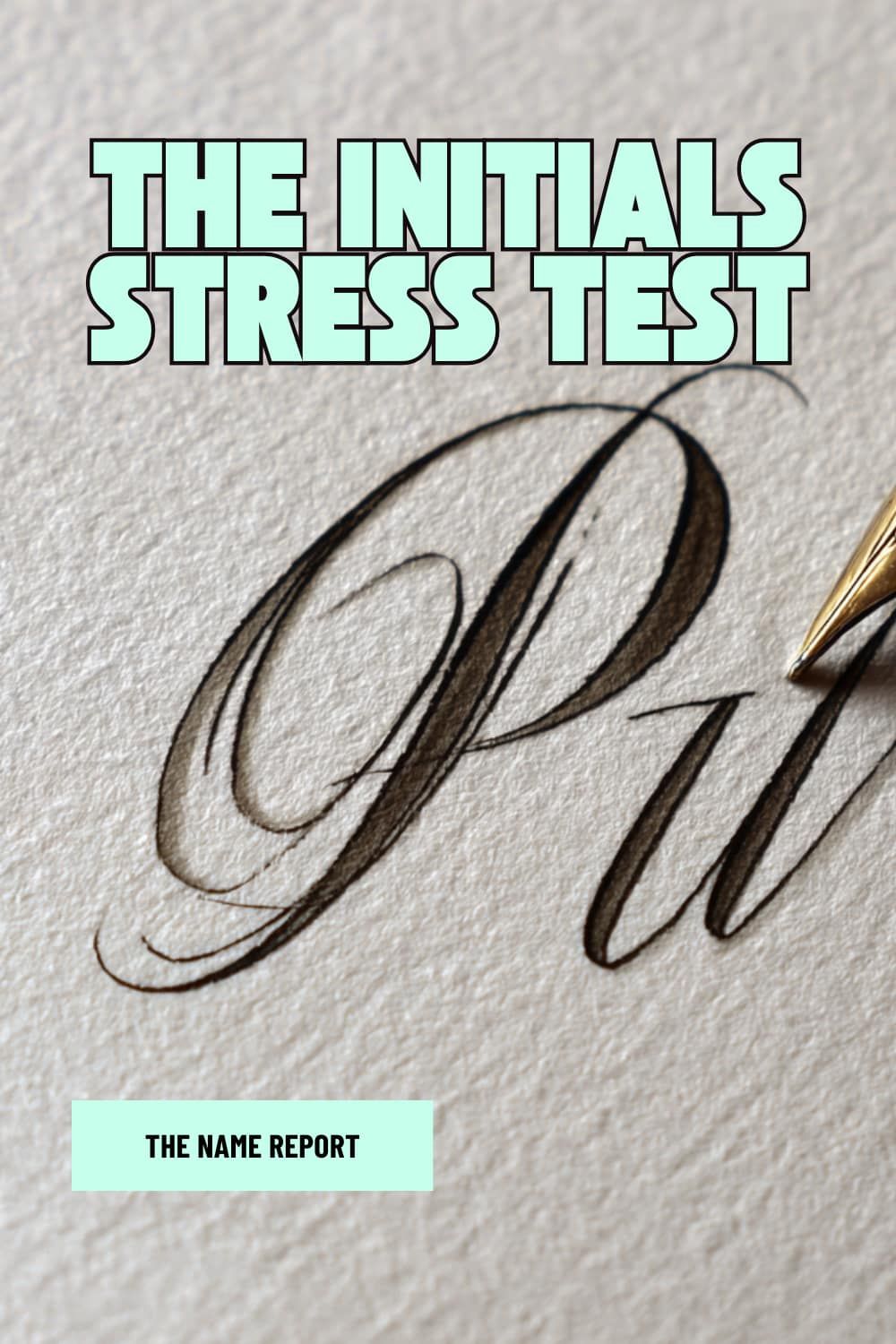
Because here’s the reality: if you name your daughter Penelope Ursula Smith, she’s going to spend her life managing the fact that her initials spell “P.U.”—which, in English, is a universal expression of disgust. If you name your son Brandon Oliver Martinez, he’s looking at “B.O.”—body odor. If you name your daughter Sarah Anna Martin, she’s got “S.A.M.”—which might work or might feel like a boy’s name depending on her feelings about gender fluidity.
This isn’t a minor concern. This is something that will follow your child through childhood teasing, into professional contexts, into their actual life. And it’s completely avoidable with a little forethought.
The good news: you can avoid this. The better news: understanding the “initials stress test” also teaches you something useful about how names function in the world beyond just their individual beauty.
The Problem: Why Initials Matter (More Than You Think)
First, understand why this actually matters. Because some parents dismiss it: “It’s just initials. Nobody will care.”
But here’s what happens:
In childhood, a kid with unfortunate initials becomes a target. Kids are cruel. “Look, it’s P.U.! Pee-you! You stink!” It’s the kind of thing that seems minor to adults but feels deeply humiliating to a child. It becomes part of how they’re perceived.
In professional contexts, initials appear on business cards, nameplates, institutional records. A lawyer with initials that spell something unfortunate is carrying that into professional spaces. It creates a subtle impression, a moment of awkwardness, a small barrier to being taken entirely seriously.
In personal contexts, monograms appear on everything—gifts, stationery, luggage. If your initials spell something unfortunate, you’re either going to avoid monogrammed items (limiting your choices) or you’re going to have to explain why your monogram spells “B.O.” every time someone asks about it.
In official documents, your initials are there permanently. On your diploma. On your driver’s license. On legal documents. The name is official, and so are the initials.
This isn’t catastrophic. Your child can absolutely survive having unfortunate initials. But it’s completely avoidable. Why would you not avoid it?
The Common Traps: What Actually Spells Bad
Let’s be real about what creates problems:
The universally bad ones:
- P.U. (Penelope Ursula, etc.)—Literally the sound and abbreviation for disgust
- B.O.—Body odor, explicit and unavoidable
- S.T.D.—Sexually transmitted disease (this one is Chef’s kiss for how bad it is)
- A.S.S.—Self-explanatory
- D.U.M.—Not great
- D.A.M.—Also unfortunate
The contextually unfortunate ones:
- Anything that spells a slur (and there are more than you might think—check before you finalize)
- Names that spell common insults or expressions of disgust
- Initials that spell common acronyms with negative associations (A.I.D.S., for instance—unlikely but horrifying if it happens)
The ones that are more subtle but still awkward:
- B.A. (Baby, diminutive energy)
- J.A.M. (Jam, which is fine but rhythmically weird)
- A.M. (Morning? Okay but odd)
- P.M. (Afternoon? Same issue)
- Really common initials that feel generic (J.S., M.S.—feels like placeholder names)
The Test: How to Check Before You Commit
Before you finalize a name, run this test:
Step 1: Write out the initials. First name initial, middle name initial, last name initial. Put them together. Say them out loud.
Ask yourself: Does this spell anything? Anything at all?
Step 2: Check against the obvious bad ones. Go through the universally unfortunate list above. Is your combination on it?
Step 3: Think about context. Does it spell something that could be teasing material in a school context? Does it spell an acronym with negative associations? Does it feel awkward when said aloud?
Step 4: Get a second opinion. Run it by someone else (ideally someone with a different sense of humor or cultural context than you have). Sometimes what seems fine to you will make someone else cringe.
Step 5: Live with it mentally. Say the initials in your head for a few days. Imagine your child using them. Imagine a teacher calling roll and saying the initials out loud. Imagine someone embroidering them on a towel.
If you get uncomfortable at any point, that’s your answer. The initials aren’t working.
The Solutions: How to Fix It
If you’ve found that your chosen name combination creates unfortunate initials, you have options:
Option 1: Change the first name. Keep your middle and last name, change the first name to something that creates better initials. This is often the easiest fix because there are so many possible first names.
Option 2: Change the middle name. Keep your first and last name, change the middle name. This is also effective and sometimes easier because middle names are often chosen for specific reasons (family, meaning) that might not be as attached to first names.
Option 3: Accept it and move forward consciously. If you genuinely love all three names and the initials are only mildly unfortunate (not P.U./B.O. level), you can choose to keep them. Just do it knowing what you’re choosing. Your child can theoretically go by initials differently (use middle initials, use a nickname, eventually choose their own way of presenting).
Option 4: Reconsider the whole combination. Sometimes you realize you were choosing names that don’t actually work together. This is an opportunity to step back and choose again.
The Real Question: What Are You Actually Choosing?
Here’s what the initials stress test really teaches you: naming isn’t just about individual names. It’s about how names function in systems. How they appear in combination. How they work in the world, not just in your imagination.
When you choose names, you’re choosing:
- How your child will be identified in official documents
- What will appear on their diploma, driver’s license, professional materials
- What will be monogrammed on gifts
- What other people will see when they look up your child’s name
- What initials will be in everyone’s mind when they think of your child
These things matter. Not catastrophically, but really.
And understanding that naming is systemic—that it’s not just sound but also visual representation, acronym creation, formal documentation—helps you make better choices overall.
The Professional Consideration
One more thing worth thinking about: your child will eventually be a professional. Maybe a doctor, a lawyer, an executive, an academic, a business owner.
In professional contexts, initials matter. A monogram on letterhead is a design element. A name on a business card is a first impression. A diploma with unfortunate initials hangs on an office wall.
You’re not choosing a name for your newborn. You’re choosing a name that your child will carry into every professional context they’ll ever enter. The initials stress test is partly about childhood teasing, but it’s also about adult professionalism.
Your future doctor doesn’t want to be introducing themselves with initials that spell “B.O.” Your future lawyer doesn’t want unfortunate initials on their business card. Your future executive doesn’t want awkward monograms on their office items.
This isn’t about limiting your choices to the “safe” names. It’s just about making sure that the beautiful name you’ve chosen doesn’t create a systemic problem that your child will be managing for the rest of their life.
The Bigger Picture: What This Reveals About Naming
The initials stress test is a small thing. But it reveals something important about naming: it’s not just aesthetic. It’s practical. It’s about systems. It’s about how names function in the world.
When you choose names, you’re choosing something that will appear:
- On legal documents
- On school records
- On professional materials
- In monograms and embroidery
- In official contexts across decades
The beauty of the name matters. But so does how it functions in these practical systems.
This is what intentional naming actually means: thinking not just about how the name sounds, but about how it functions. How it appears in combination with other names. How it will work across every context your child will ever need it in.
The initials stress test is just one way of testing that. But it’s a good one. Because it makes you think about your child’s name not just as a beautiful sound, but as an actual functional system that will follow them through life.
The Checklist: Before You Sign
Before you finalize your child’s name, run through this checklist:
- [ ] Do the initials spell anything unfortunate?
- [ ] Would kids tease about the initials?
- [ ] Does the combination work professionally?
- [ ] How does it look in a monogram?
- [ ] Say the initials out loud—does it sound okay?
- [ ] Imagine it on a business card—does it work?
- [ ] Get a second opinion from someone who doesn’t love the names the way you do
- [ ] Live with the initials for a few days mentally
- [ ] Imagine your child explaining their initials in a professional context—is there any awkwardness?
If you pass this test, you’re good. Your child has a name that works not just as a sound, but as a complete system that will serve them across their entire life.
If you fail the test on any major point, it’s worth reconsidering. Because this is one of the few places in naming where an ounce of prevention is genuinely worth a pound of cure.
Related Reading
Want to dig deeper into practical naming, what names communicate in different contexts, and how to make choices that work across systems? Check out:
- How to Choose a Baby Name That Goes With Your Last Name: A Framework for Flow, Rhythm, and Actual Compatibility
- Names That Actually Age Well: From Nursery to C-Suite—The Names That Never Require Reinvention
- Gender-Neutral Names That Work in the Boardroom: 80+ Unisex Picks That Age From Nursery to C-Suite
- What Baby Names Signal About Values: Naming as Cultural Transmission, Identity Politics, and the Stories You Want Them to Carry
- Names With Built-In Nicknames: Sophistication + Practicality—The Best of Both Worlds
- Names That Sound Like a Cold Glass of Seltzer: Crisp, Sharp, and Undeniably Refreshing “Short-Burst” Names
- The Middle Name Question: Do You Even Need One?
- Baby Names to Avoid in 2026: Why Certain Naming Choices Create Friction
- How to Modernize an “Ugly” Family Name: The Definitive Playbook for the “Honor Name” Dilemma
Your Name Report
Your child’s name needs to work across decades and contexts. Get your Personalized Name Report at https://app.thenamereport.com/—because intentional naming means thinking about every way that name will appear in the world, not just how it sounds in isolation.