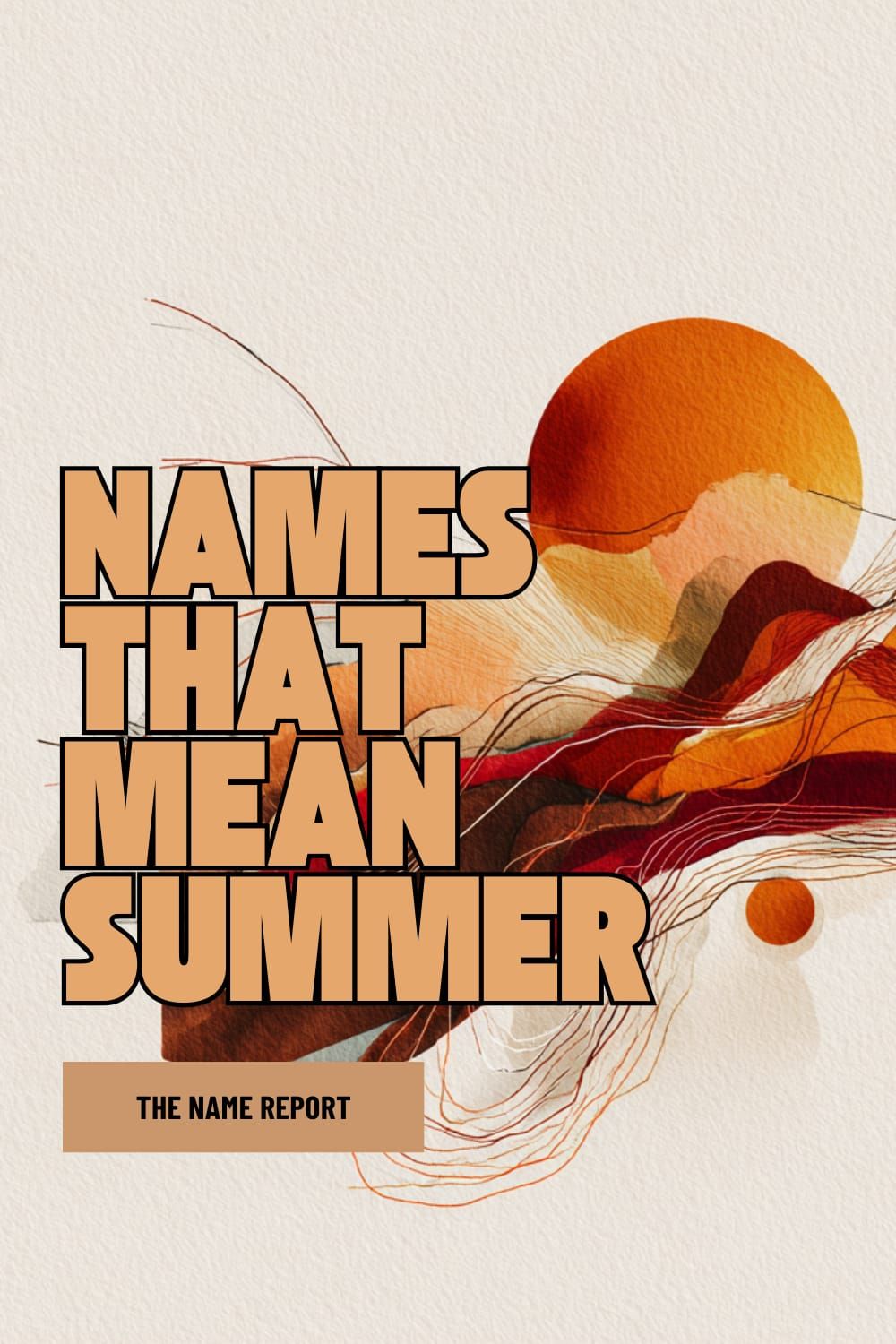
Summer is excess. It’s brightness without apology. It’s long days and no dimming. It’s abundance—heat, light, growth so fast you can almost see it happening. Everything is possible in summer because everything is visible.
When you name your child something that means summer, you’re naming them toward that kind of abundance. You’re not naming them toward restraint or reflection. You’re naming them toward expansion, toward taking up space, toward shining.
This is different from names that mean spring, which carry the push of emergence. Summer is what comes after emergence—the full expression, the overflow, the refusal to be small.
It’s different from names that mean winter, and you can explore all seasonal names together with names that mean spring and names that mean autumn, which ask for inwardness. Summer asks for outwardness. It demands to be seen.
What Summer Names Carry
Summer is the season of maximum visibility and maximum expansion. Nothing is hidden in summer. The days are long enough that you can see everything. The heat is intense enough that you feel everything.
Summer names embody this:
They announce brightness and visibility.
A summer name doesn’t let you hide. It announces presence. It says: I am here. I take up space. I cannot be missed.
They carry joy as a value.
Summer is the season most associated with joy—long days, warmth, freedom from the constraints of other seasons. Summer names carry that joy as inherent, not earned. Joy is the baseline.
They work across genders increasingly.
The best summer names—Sol, Sunny, Kai—work for any gender. They carry the season’s expansive energy regardless of traditional gender coding.
They make a statement about confidence.
Choosing a summer name is saying: My child will be confident. My child will take up space. My child will shine without apologizing.
This is a values statement. You’re choosing expansion over restraint.
Names That Literally Mean Summer (Across Cultures)
Sol (SOLE)
Latin/Spanish, “sun.” Direct and powerful. Sol is increasingly used across genders and carries the summer sun’s uncompromising brightness.
Solstice (SOL-stis)
English, the summer solstice—the moment of maximum daylight. Solstice is bold, specific, and increasingly used as a name.
Sunny (SUN-ee)
English, straightforward and joyful. Sunny carries summer’s brightness and joy as fundamental qualities.
Estio (es-TEE-oh)
Latin/Spanish, “summer.” Less commonly used but carries real weight when chosen. It announces the season explicitly.
Haf (HAHF)
Welsh, “summer.” Carries Welsh tradition and the season simultaneously.
Kaida (KY-duh)
Japanese, “little dragon,” but carries summer associations in Japanese culture. Dragons in Japanese tradition are connected to water and summer storms.
Soleil (so-LAY)
French, “sun.” While used more broadly, Soleil is intrinsically summer—it’s the sun at its most present and powerful.
Names That Embody Summer (Brightness, Abundance, Joy, Expansion)
Kai (KY)
Hawaiian/Japanese, “ocean.” While water-coded, Kai carries summer’s warmth and freedom. It works across all contexts and genders.
Lyric (LEER-ik)
English, from “lyrical.” Carries summer’s expansive joy and expression. Works across genders and carries the season’s lightness.
Aurelia (aw-RAY-lee-uh)
Latin, “golden.” Carries summer’s golden light and warmth. Increasingly used across genders.
Leo (LAY-oh)
Latin, “lion.” The zodiac sign of Leo (mid-summer) is the lion—confident, bright, refusing to be small. Carries summer’s unapologetic presence.
Radiance / Radia (RAY-dee-uh)
Latin, “radiating light.” Carries summer’s brightness as essential quality.
Jasmine (JAZ-min)
Persian, the fragrant flower that blooms in summer. Carries summer’s sensory abundance.
Dash (DASH)
English, suggesting movement and brightness. Carries summer’s energy and forward momentum.
Vale (VALE)
Latin, “strong” or “valley.” While not explicitly summer, Vale carries the season’s grounded abundance and strength.
Elio (AY-lee-oh)
Italian/Spanish, “of the sun.” Carries Italian warmth and summer brightness. Works across genders.
Haven (HAY-vun)
English, “safe harbor.” Carries summer’s promise of safety and abundance. Works across genders.
Thea (THEE-uh)
Greek, “goddess” or from “theos” (divine). Carries summer’s brightness and divine quality of abundant light.
Building a Summer-Named Child
When you choose a summer name, you’re choosing a season of maximum expression and visibility. You’re saying your child is meant to shine. You’re saying taking up space is good, that brightness matters, that joy is not frivolous.
This is different from spring names, which are about the process of growth. Summer is about the result—the full expression, the abundance, the overflow.
It’s different from autumn names, which carry gratitude and transition. Summer is about the moment before transition—the holding, the brightness, the full expression.
It’s different from winter names, which ask you to go inward. Summer asks you to expand outward.
When you name your child toward summer, you’re naming them toward visibility, confidence, and the refusal to diminish themselves.
Summer Naming in 2026: The Abundance We Deserve
There’s something happening in naming right now. Parents are choosing seasonal names with intention, toward values they want to signal, toward children who understand they deserve to take up space.
Summer names represent a specific kind of confidence: the belief that brightness is good, that abundance is not excessive, that taking up space is not selfish—it’s necessary.
That’s not arrogance. That’s earned visibility.