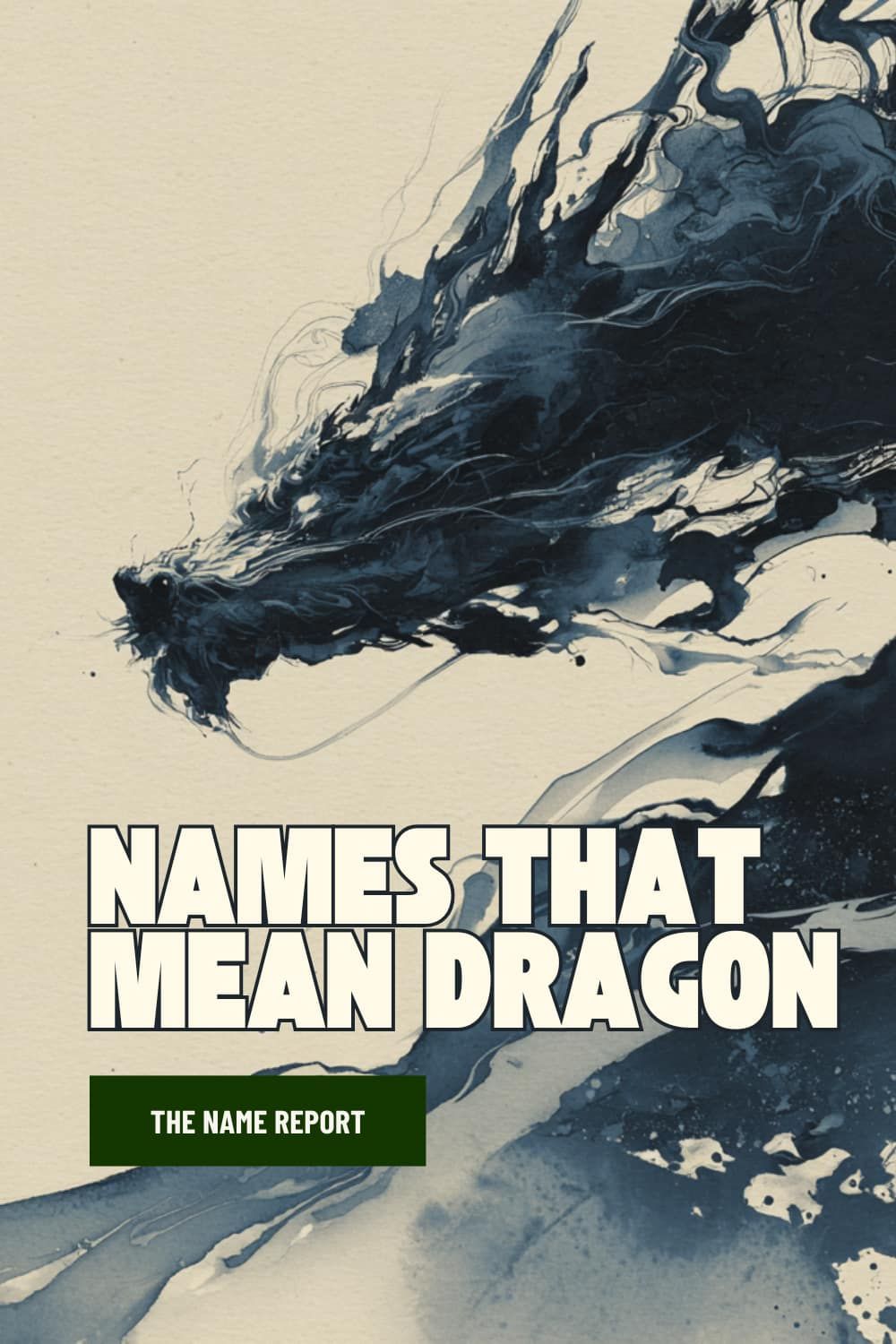
Dragon names have stopped being relegated to fantasy novels and are now quietly taking over nurseries. And honestly? It makes sense. If you’re naming a human being, why settle for something that whispers when you could choose something that roars?
We live in an era where parents are no longer apologizing for big, mythological energy. They’re leaning into it. The rise of romantasy culture, the mainstreaming of anime aesthetics, the quiet reclamation of names that feel ancient and powerful—it’s all colliding at once. Dragon names represent something specific in our cultural moment: the desire to give your kid a name that carries weight without being pretentious, that sounds mythological without being unpronounceable, that signals depth and imagination without requiring explanation.
This isn’t about twee woodland fantasies. This is about names with actual backbone.
Dragon Names From East Asian Traditions: Where the Real Dragon Energy Lives
If you’re serious about dragon symbolism, you have to go to the source. In Japanese, Chinese, and Korean traditions, dragons represent wisdom, power, prosperity, and transformation. They’re celestial beings—not villains. When parents choose these names, they’re tapping into thousands of years of cultural reverence.
Ryuu (Japanese, RYoo) — The straightforward choice. Means “dragon” directly. It’s minimalist in the way that matters: three letters, maximum impact. Choose this if you want something that hits hard without decoration. The kind of name that sounds equally at home on a five-year-old and a forty-five-year-old CEO.
Tatsu (Japanese, TAH-tsoo) — Another direct translation, but Tatsu has a different texture. It’s slightly less austere than Ryuu, with a softer landing. There’s something almost literary about it—it conjures the image of scrollwork and ink paintings. Tatsu is what happens when you want power with a brushstroke quality.
Kaida (Japanese, KAI-dah) — “Little dragon.” If you want the symbolism without the severity, Kaida splits the difference. It’s got the mythological root, but the diminutive softens it just enough to make it approachable. Works for any gender, though it’s gaining traction as a girl name in Western contexts.
Daichi (Japanese, DAI-chee) — Means “great/vast earth” (not technically dragon, but carries that same foundational power). The relationship between earth and dragons in East Asian cosmology is intrinsic—they’re grounded, celestial beings. Daichi has the weight without the fantasy overtones, which is probably why it’s steadily climbing.
Tatsuo (Japanese, TAH-tsoo-oh) — The elder statesman of dragon names. This is a name that belongs to someone who’s probably an architect or a philosophy professor. It’s got generational weight. If Ryuu is a tech founder, Tatsuo is the person who taught them everything.
Long (Chinese, LONG) — Pure dragon energy in one syllable. In Mandarin, this is the character that appears in dynasties and imperial symbolism. It’s rare in English-speaking contexts, which is exactly why it works. The name carries the weight of centuries without needing explanation.
Zhuo (Chinese, JWOH) — Not a direct dragon reference, but associated with dragon iconography in classical Chinese literature. It’s the kind of name that rewards cultural literacy without demanding it.
Lung (Cantonese, LOONG) — Another East Asian direct translation. Lung has a different acoustic quality than its Mandarin or Japanese equivalents—it’s got a harder landing, which gives it a different kind of power.
Akira (Japanese, ah-KEER-ah) — Traditionally masculine, though increasingly gender-neutral. While Akira doesn’t mean “dragon” directly, it means “bright” or “clear,” and in anime and mythology, dragons are often depicted as beings of clarity and cosmic understanding. The name carries that luminous quality. It’s also experienced a massive cultural resurgence thanks to the cyberpunk aesthetic—which, interestingly, is just futuristic dragon mythology. If you’re drawn to this kind of Japanese naming depth, explore more Japanese names by their actual meanings—fire, death, stars, moonlight, love.
Shenlong (Chinese, SHEN-long) — “Spirit dragon.” This is the full ceremonial version, rarely used as a given name in contemporary contexts, but it appears frequently enough in literary and cultural references that parents who understand it recognize the weight they’re giving. It’s the kind of name you choose if you’re comfortable with cultural depth without needing validation.
Dragon Names From European Mythology: The Reimagining
Western dragons get a worse reputation—they’re hoarding, fire-breathing obstacles in medieval narratives. But contemporary culture is rehabilitating them. They’re no longer just obstacles; they’re characters with interior lives, politics, and magic systems. Your kid named after a Western dragon is named after a being with complexity.
Drake (English origin, DRAYK) — Technically means “dragon” in archaic English. The name is having a quiet renaissance, separate from its association with the rapper. It’s got that vintage-future quality—it could belong to a 1950s aerospace engineer or a 2050s climate scientist. Short enough to carry authority, literary enough to feel intentional.
Draco (Latin, DRAH-ko) — The Latin origin point. Constellation, dragon slayer’s nemesis, the most literary dragon name available. If you’re choosing Draco, you’ve probably read Beowulf or at least thought about it. There’s intellectual weight here. Also, it’s the Draco Malfoy effect—even if you’re not a Harry Potter parent, people will recognize the cultural reference, which gives the name a certain shorthand sophistication.
Smaug (Tolkien creation, SMOG) — Here’s where it gets interesting. Smaug is a proper character name (the dragon from The Hobbit), but some contemporary parents are using it as a given name. It’s bold in a way that feels almost punk rock. You’re essentially naming your kid “The Dragon” and trusting that people understand the literary reference. Works if you’re comfortable with your child’s name being explicitly fantastical. This is the kind of literary naming energy you see in the broader dark romantasy movement—names that signal you’re comfortable with complexity and narrative depth.
Draconis (Latin/Invented, drah-KO-nis) — The Latinized, formal version. Not a traditional given name, but neither are half the names being invented right now. If you want dragon symbolism with sophisticated ornamentation, Draconis is the move. It’s pretentious in the best way—it sounds like it belongs to someone who will definitely have opinions about things.
Wyrm (Old English, WURM) — The ancient English/Norse version of dragon. Wyrm has a guttural, powerful quality. It’s short, punchy, and carries the weight of Old English without being precious about it. If Drake feels too contemporary, Wyrm is the primal alternative.
Fafnir (Norse, FAHF-nir) — Named after the dragon from Norse mythology (also the dwarf-turned-dragon from Wagner). Fafnir is the dragon of greed and transformation. It’s got narrative depth—the name comes with a story about what happens when you choose power over connection. That’s the kind of complexity parents are looking for now.
Nidhogg (Norse, NID-hawg) — The dragon that gnaws at the roots of Yggdrasil. This is the ultimate power name if you’re deep in Norse mythology. It’s also genuinely difficult to pronounce for most English speakers, which is either a feature or a bug depending on your tolerance for constant correction.
Tarasque (Provençal, tah-RAHSK) — The French dragon legend. Less known than Norse equivalents, which is precisely why it works. You get the dragon symbolism with genuine cultural specificity and an escape hatch from overused mythology references.
Auberon (English/Germanic, AW-ber-awn) — Not technically a dragon, but Auberon (or Oberon) is the fairy king with dragon-adjacent magical authority. It’s got the mystical power without the literal reptilian imagery. Works if you want dragon energy tempered with courtly elegance.
Names Inspired by Dragon Characteristics: The Subtler Route
Not everyone wants to name their kid Dragon directly. Some parents want names that feel like dragons without stating it literally. These names capture the qualities we associate with dragons: transformation, fire, ancient wisdom, iridescence.
Ember (English, EM-ber) — The fire without the fury. Ember is having a massive moment, and for good reason. It carries the heat and light of dragon fire but with a contemplative quality. It’s got that Gen Z maximalism vibe (all the texture, all the intensity, distilled into something wearable). Works for any gender. If you’re exploring fire-based names more broadly, there’s a whole universe of names that mean fire worth exploring—bright, bold, and unapologetic.
Blaze (English, BLAZE) — More aggressively dragon-coded than Ember, but still accessible. Blaze is for parents who want their kid to carry fire symbolism without reservation. It’s confident in a way that borders on rebellious.
Aiden (Irish/Gaelic origin, AY-den) — Means “little fire.” It’s one of the most popular boy names of the last decade, which means it’s normalized enough to work without explanation, but still carries that elemental dragon energy. It’s the gateway dragon name—the one that lets you signal mythological interest without full commitment.
Silas (Greek origin, SY-las) — Means “from the forest” or “of the woods,” but carries an archaic, ancient quality that feels dragon-adjacent. There’s something about the texture of Silas that conjures old wisdom and hidden knowledge. It’s the intellectual’s dragon name.
Dorian (Greek, DOR-ee-an) — Associated with Dorian Gray, which gives it a transformative quality (literally about transformation and the corruption of time). Dragons are creatures of transformation. Dorian feels ancient and mythological without being literally dragon-coded. You’re signaling cultural literacy and a certain aesthetic sophistication.
Azura (Spanish, ah-ZOO-rah) — Means “blue,” but blue is the color of celestial dragons in East Asian traditions. Azura has that iridescent quality—it suggests scales catching light. It’s a girl name with mythological depth without being heavy-handed about it.
Katsuro (Japanese, kaht-SOO-roh) — Doesn’t mean dragon directly, but combines “katsu” (victory/dragon-adjacent power) with traditional naming structures. It’s got that sophisticated cultural specificity that appeals to parents looking for substance over trend.
Celestine (Latin, sel-es-TEEN) — Dragons are often celestial beings. Celestine carries that cosmic quality without the literal dragon reference. It’s elegant, slightly antiquated, and carries real weight in a single word.
Lysander (Greek, lie-SAN-der) — “Lion-man” in Greek, but it carries that same ancient warrior energy that dragons represent. It’s got the mythological depth without the literal monster coding. Perfect for parents who want their kid to sound like they stepped out of a classical text.
The Cultural Moment: Why Dragon Names Are Happening Right Now
Dragon names aren’t random. They’re symptomatic of something bigger happening in how we approach childhood and identity.
First: The mainstreaming of anime and manga means East Asian aesthetics and values are no longer niche. Parents who grew up with Dragon Ball, Naruto, and that entire cultural ecosystem don’t see dragon symbolism as “foreign”—it’s as native as European mythology. Names like Ryuu or Kaida aren’t exotic; they’re just good names that happen to come from different traditions.
Second: The romantasy boom means young people are naming their kids after the fantasy media they consumed. They’re comfortable with literary, intentional, heavy naming. A kid named Smaug or Fafnir is being named into a narrative. And contemporary parents? They’re increasingly okay with that. In fact, this whole movement is part of a larger romantasy naming trend where parents embrace main character energy and narrative depth.
Third: There’s genuine backlash against the minimalist naming trend. For the last decade, parents were choosing names like Aiden, Liam, and Emma—short, accessible, minimal. Now? There’s hunger for texture. For names that carry mythology, meaning, cultural weight. Dragon names are the backlash against blandness. They’re the maximalist move.
Fourth: Parents are weaponizing names as identity markers. If you choose a dragon name, you’re signaling that your kid is going to be weird, imaginative, powerful—and you’re excited about that. You’re not apologizing for depth or mythology or the fact that your child’s name requires explanation. There’s something deeply punk rock about that.
Names to Consider If You’re Dragon-Curious
For parents who want full dragon commitment: Ryuu, Long, Draco, Smaug, Fafnir
For parents who want dragon energy with cultural specificity: Kaida, Tatsu, Tatsuo, Shenlong, Tarasque
For parents who want dragon vibes without literal dragon: Ember, Aiden, Silas, Azura, Celestine
For parents building a sibling set with mythological coherence: Pair dragon names with other mythology names like Orion, Iris, Castor, or Calypso. You’re building a constellation, not just naming individuals.
What Dragon Names Signal
Here’s the unspoken promise of a dragon name: You believe your kid is going to be interesting. You believe they can carry weight. You’re not trying to make them blend in. You’re essentially saying, “My child is going to need a name that can hold the complexity of who they become.” That’s not arrogance. That’s just honesty.
Dragon names work because they acknowledge what naming actually is: an act of imagination. You’re not just giving your kid a label; you’re participating in mythology. You’re saying yes to magic systems and ancient wisdom and the possibility that your child might be someone who changes everything. This is the same energy behind names with powerful meanings—names that demand substance and signal intention.
That’s what dragons do. They transform the narrative. Why shouldn’t your kid have a name that reflects that?
Ready to Find Your Name?
If you’re drawn to dragon names—or names that carry this kind of mythological depth and power—get specific about what you’re actually looking for. What qualities are you signaling? What mythology are you tapping into? What do you want your kid’s name to say?
Your Personalized Name Report breaks down exactly what your name preferences reveal about your aesthetic, your values, and the kind of identity you’re building. Get clarity on whether you’re drawn to East Asian dragon symbolism, European mythology, elemental power, or cosmic wisdom—and discover dozens of names that match your actual instincts, not just trend lists.
Get Your Personalized Name Report →
Because naming your kid is the first real act of imagination in their life. It deserves to be intentional.
Related Reading
- Names With Powerful Meanings: Because Your Child Deserves Authority
- Dark Romantasy Names: Moody, Beautiful, and Unapologetically Dramatic
- Japanese Names by Meaning: Fire, Death, Stars, Moonlight, and Love
- Fae Names: Ethereal, Magical, and Genuinely Powerful
- Greek Mythology Baby Names: Because Your Child Deserves a Cosmology
- Norse Goddess Names: Viking Power and Celestial Authority