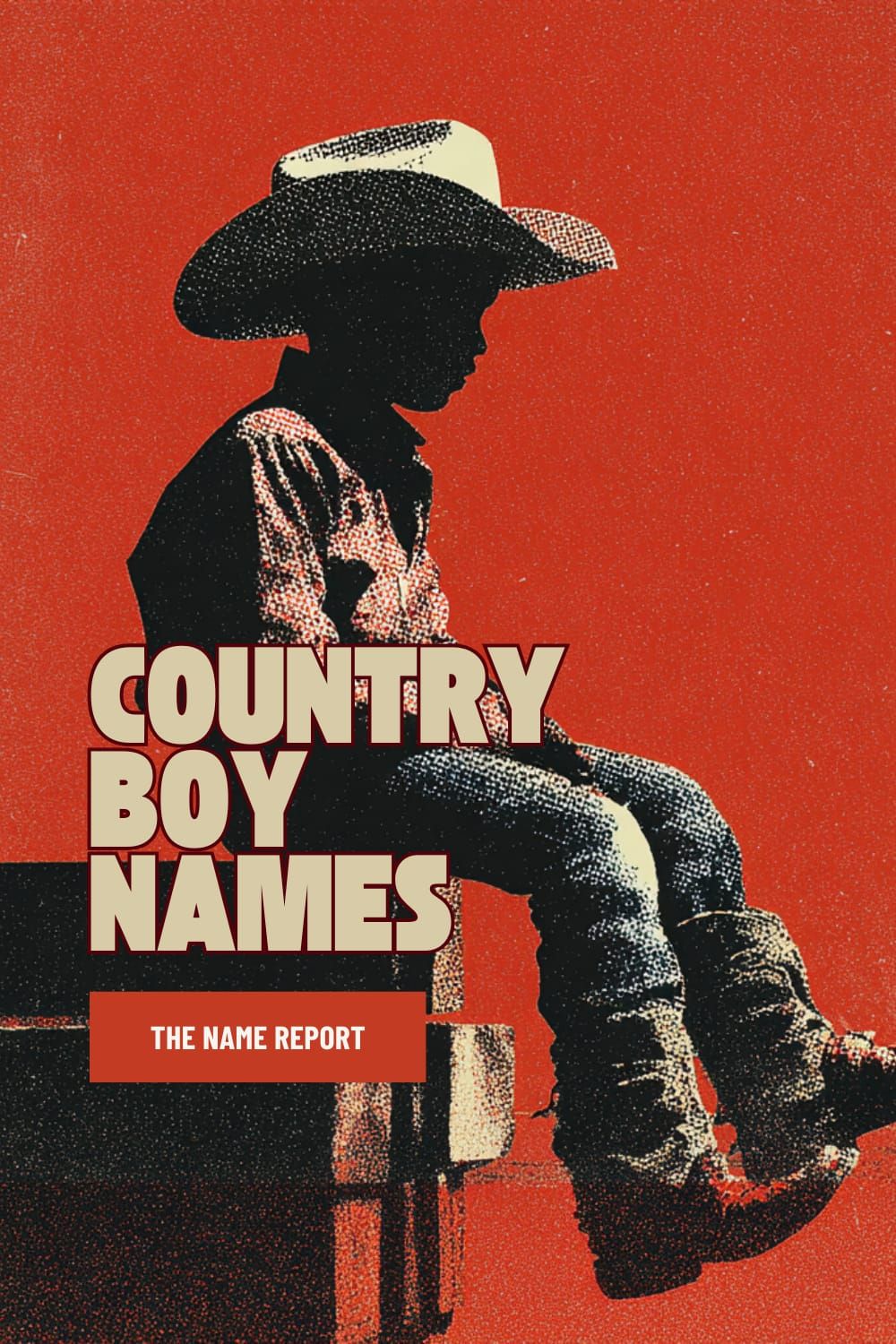
There’s a particular kind of naming that happens in rural spaces. Names that aren’t chosen for their trendiness or their Instagram-ability. Names that are chosen because they mean something, because they sound like someone who works with their hands, who understands the land, who builds things that last. Names that refuse to apologize for being straightforward.
Country boy names are having a moment not because they’re trendy, but because they’re real. In a culture oversaturated with carefully curated aesthetics, there’s something genuinely refreshing about names that sound like they belong to someone who actually does things. Someone who might have dirt under their fingernails. Someone who doesn’t need to perform authenticity because their life is the performance.
The country naming aesthetic spans from the American West to Southern Appalachia to agricultural heartland—what they all share is a kind of uncompromising straightforwardness. These names don’t whisper. They don’t require explanation. They just work. On a business card. On a ranch. In a recording studio. Everywhere.
What Makes a Name Country
The aesthetic of authenticity. Country names sound like they belong to people who have real skills. People who build, repair, grow, create things with their hands. There’s no pretense. These names exist in a world of work, not performance. They suggest someone who shows up, does the job, doesn’t need external validation. This is distinct from frontier names—frontier is about pioneering; country is about sustaining. Practical names that have staying power.
The sound of straightforwardness. Country names often have one or two syllables, hard consonants or clear vowels, and a kind of phonetic honesty. They don’t play games. Say Wyatt. Say Colt. Say Hank. These are names that sound like decisions, not accidents. They’re strong without being aggressive. Direct without being unkind.
The meaning of substance. Many country names have etymologies rooted in real things: work, land, animals, weather, actual qualities a person might have. They’re not names about being special or unique. They’re names about being capable. About being someone others can depend on. Names that signal values—and the values here are reliability, competence, and genuine authenticity.
Country names work across contexts because they’re rooted in qualities that never go out of style: strength, reliability, the capacity to create and sustain. They’re the names of people who understand that real life requires actual skills.
Country Boy Names With Genuine Grit
The Western Rooted (Landscape, Frontier, Actual Ranch Life)
Wyatt (WY-ut) — English, meaning “brave in battle,” but it’s become the quintessential Western name. There’s something about Wyatt that sounds like someone who knows their way around a landscape. It’s got that particular frontier quality without being costume-y. Think Wyatt Earp, but also every rancher who chose this name for a reason. Names that feel like the American West carry this kind of authenticity.
Colt (KOLT) — English, meaning “young horse,” and it’s unapologetically country. There’s something about Colt that sounds like someone who understands animals, who works with land. It’s got a particular frontier charm that feels earned rather than performed. Single syllable, clear sound, it works everywhere.
Boone (BOON) — Scottish, possibly meaning “blessing” or “good,” but it’s become the name of pioneers and country people. Think Daniel Boone. There’s something about Boone that sounds like someone who’s comfortable in wilderness, who doesn’t need cities to feel complete. It’s got frontier character.
Maverick (MAV-er-ik) — American, meaning “independent-minded person.” Maverick is unmistakably country-coded, but it’s also working in contemporary culture because the meaning is universal. It sounds like someone who does things their own way. There’s Western authenticity here without kitsch.
Sawyer (SAW-yer) — English, occupational name for someone who saws wood. And there’s something about Sawyer that’s undeniably country—practical, grounded, rooted in actual work. It’s got a softness that makes it accessible, but the occupational meaning gives it substance. This is rugged and real without being aggressive.
Ranger (RAYN-jer) — English, occupational name for a forest ranger or someone who patrols land. Ranger sounds like someone who knows how to move through landscape, who understands terrain. It’s got an authority that comes from actual competence. There’s something deeply grounded about this name.
Remington (REM-ing-tun) — English, meaning “river bank settlement,” and it’s become the kind of country name that works across contexts. It’s got formality (the full name) and accessibility (Remy as nickname). There’s something about Remington that sounds like someone with skills and style. Names with built-in nicknames.
Dalton (DAL-tun) — English, meaning “from the dale,” and it sounds like someone rooted in landscape. There’s something about Dalton that feels like it belongs to someone who understands land the way a farmer does—intimate knowledge, deep roots. It’s got a particular country authenticity.
Hollis (HAH-lis) — English, possibly from “holly trees,” and it’s got a nature-rooted quality that feels genuinely country. There’s something about Hollis that sounds like someone connected to the actual land, not just the aesthetic. It’s got a quiet strength.
The Southern Grounded (Drawl, Warmth, Genuine Hospitality)
Jasper (JAS-pur) — We’ve seen this in the vintage list, but it belongs here too—there’s a particular Southern charm to Jasper. It sounds like someone who pays attention, who cares about details, who makes things right. It’s warm without being saccharine. This is Southern sophistication without pretension.
Hank (HANK) — Old German, short for Henry, but Hank has become its own unmistakably country name. There’s a particular Southern and Western charm to Hank—it sounds like someone genuine, someone who doesn’t put on airs. It’s got country music culture woven into it (Hank Williams), which gives it authenticity.
Silas (SY-lus) — We’ve seen Silas across the masculine lists, but it’s genuinely country too. There’s something about Silas that sounds like someone rooted, grounded, connected to place. It’s got a particular Southern quality—think Silas Marner, the weaver, someone with actual skills and real depth. Forest-rooted names often have this quality.
Amos (AY-mus) — Hebrew, meaning “carried by God,” but Amos is unmistakably country. There’s something about the sound—the way it lands—that feels Southern and rural. It’s got a particular authenticity that comes from generations of people choosing it specifically for its character. Frontier names and country names overlap heavily.
Clint (KLINT) — Old English, meaning “from the headland,” but Clint is pure country. Single syllable, hard consonant, it sounds like someone who doesn’t need extra syllables to be understood. There’s a Western and Southern appeal here. It’s got a particular rugged authenticity.
Gideon (GID-ee-un) — Hebrew, meaning “mighty warrior” or “hewer,” and Gideon has a particular country appeal. It’s biblical without being preachy. It sounds like someone capable and grounded. There’s something about the sound that feels rural and real.
Jasper (again, but it deserves it) — The Southern charm is undeniable. It’s warm, it’s genuine, it’s the kind of name that sounds like someone who will take care of things.
Caleb (KAY-leb) — Hebrew, meaning “devotion to God” or “whole-hearted,” and Caleb has a particular country appeal. It’s biblical, it’s accessible, it sounds like someone genuine and grounded. It works in Southern, Western, and agricultural contexts equally well.
Levi (LEE-vee) — Hebrew, meaning “joined” or “attached,” and Levi has become a beloved country name precisely because it sounds real. It’s got a particular authenticity, a kind of casual strength. It sounds like someone capable and unpretentious. Biblical names that feel modern.
The Occupational Real (Names Born From Actual Work)
Ryder (RY-der) — English, occupational name for someone who rides (messenger, knight). And Ryder has become undeniably country—it sounds like someone with skills, someone who does things. There’s an action quality to it. Occupational surnames that work as names carry authenticity.
Tanner (TAN-er) — English, occupational name for someone who tanned leather. Tanner sounds like someone who works with their hands, who has actual skills. It’s got a particular authenticity that comes from its meaning. This is real work translated into a name.
Cooper (KOO-per) — English, occupational name for a barrel maker. Cooper sounds like someone with genuine skills, someone who creates things. It’s got a particular authenticity that comes from occupation. There’s something about occupational names that feels genuinely country.
Thatcher (THACH-er) — English, occupational name for someone who thatches roofs. Thatcher is aggressively country—it sounds like someone with real skills and real work. It’s the kind of name that carries authenticity without trying. It demands respect through its meaning.
Mason (MAY-sun) — English, occupational name for a stonemason. And Mason has become wildly popular in country contexts because it sounds like someone who builds, who creates lasting things. It’s got a particular authenticity. There’s genuine work in this name.
Carter (CAR-ter) — English, occupational name for someone who drives a cart. Carter sounds like someone practical, someone who moves things, someone grounded. It’s got a particular country authenticity. Surname-as-first-names born from actual work carry real credibility.
Whitaker (WY-taker) — English, occupational/locational name. Whitaker has a particular frontier appeal—it sounds like someone with land, someone who owns something real. It’s got a particular authenticity that comes from specificity.
The Straightforward Strong (Names That Don’t Need Explanation)
Cash (KASH) — English, meaning “coin” or “currency,” but it’s become a country name precisely because it’s direct and unapologetic. Johnny Cash gave it legitimacy, but the name works because it sounds like someone who means business. No filler. Just direct.
Buck (BUK) — English, diminutive of various names but now its own name, meaning “male deer” or slang for a dollar. Buck sounds like someone with character, someone authentic. It’s one syllable, it’s direct, it’s got a particular country charm. There’s no pretense here.
Cody (KO-dee) — English, possibly meaning “helpful” or from the name Cody, Montana. Cody is unmistakably country—it sounds like someone real, someone who works, someone grounded. It’s got a particular Western and Southern appeal.
Storm (STORM) — English, from the weather phenomenon. Storm is the kind of country name that’s unapologetic about its meaning. It sounds like someone powerful, someone authentic, someone who doesn’t apologize for their strength. There’s a particular authenticity in nature names that work literally. Nature-inspired names with genuine grit.
Stone (STOHN) — English, from the material. Stone sounds like someone solid, grounded, real. It’s got a particular authenticity that comes from its literal meaning. It works across contexts because the metaphor is universal. It sounds like someone you can depend on.
Harley (HAR-lee) — English, meaning “hare meadow.” Harley is country-coded, but it’s also got a particular motorcycle/music culture association (Harley-Davidson, Harley Quinn) that gives it contemporary edge. It sounds real.
Lincoln (LING-kun) — English, place name meaning “lake settlement,” and Lincoln has become a beloved country name. It’s got a particular American authenticity (Lincoln, Nebraska; Lincoln as president). It sounds like someone substantial and real. Names rooted in place.
Atlas (AT-lus) — Greek, from mythology. Atlas sounds like someone who carries weight, someone strong. It’s got a particular country authenticity—it sounds like someone capable and real. There’s something about this name that feels both mythological and grounded.
The Authentically Soft (Country Without Being Hard)
Ezra (EZ-rah) — We’ve seen Ezra across many lists, but there’s a particular country appeal. It sounds like someone genuine, someone real, someone who creates things. Biblical without being preachy, it’s got multiple dimensions.
Sage (SAYJ) — We’ve seen Sage in the dark and soft masculine lists, but it’s genuinely country too. It sounds like someone wise, someone grounded, someone authentic. Gender-neutral names with this quality work beautifully in country contexts.
Wells (WELZ) — English, from a well or spring. Wells sounds like someone connected to essential things, to resources, to real utility. It’s got a particular authenticity. Surnames as first names born from actual features carry weight.
Shepherd (SHEP-erd) — English, occupational name for a shepherd. And Shepherd is the kind of country name that’s unapologetically connected to actual work and care. It sounds like someone responsible, someone who tends things. There’s a particular authenticity in this name.
Why Country Authenticity Matters: Naming Toward Real Life
Here’s what’s actually happening when you choose a country boy name: you’re naming your son toward the understanding that real life requires real skills, that authenticity comes from doing actual work, that there’s dignity and power in straightforwardness. You’re saying: my child is rooted in something real. He will understand the value of work. He will know how to build things. He will be authentic because his life will be authentic.
That’s not about restricting possibility. It’s about honoring values that have sustained communities for generations: reliability, competence, genuine connection to place or work or purpose.
Country names work across contexts precisely because they’re rooted in qualities that never go out of style. A name like Wyatt or Sawyer or Mason carries the same credibility on a business card, in a recording studio, on a ranch. That’s because they sound like someone who actually does things, regardless of what field they’re in.
These names pair beautifully with frontier names if you want to explore the pioneering angle. They complement American West names if you want the landscape connection specifically. They work alongside rugged aesthetic names if you’re looking for that particular kind of authenticity. And they honor the same values as names that signal values—the values being reliability, competence, and genuine authenticity.
The country names that are trending now are the ones that managed to stay rooted without becoming costume-y. They’re the names parents are choosing specifically because they understand that authenticity can’t be performed—it has to be built. These names suggest someone who does the building.
If your gut is drawn to names that sound like actual work, to boys who will probably understand the value of competence and genuine effort, to the understanding that straightforwardness is a form of honesty—trust that instinct. Naming toward country is naming toward authenticity. There’s everything right about it.
And if you’re building a family where values like reliability, genuine connection to work or place, and unapologetic straightforwardness matter—these names will carry those values forward. They’ll remind your son, and the world, what he’s built from.
Get Your Personalized Name Report
Want names curated specifically to your aesthetic and values? Ready to move beyond the lists and into personalized guidance? Get your Personalized Name Report at https://app.thenamereport.com/ and discover names that actually match your family’s philosophy—whether that’s rooted in landscape, occupation, genuine authenticity, or all three.