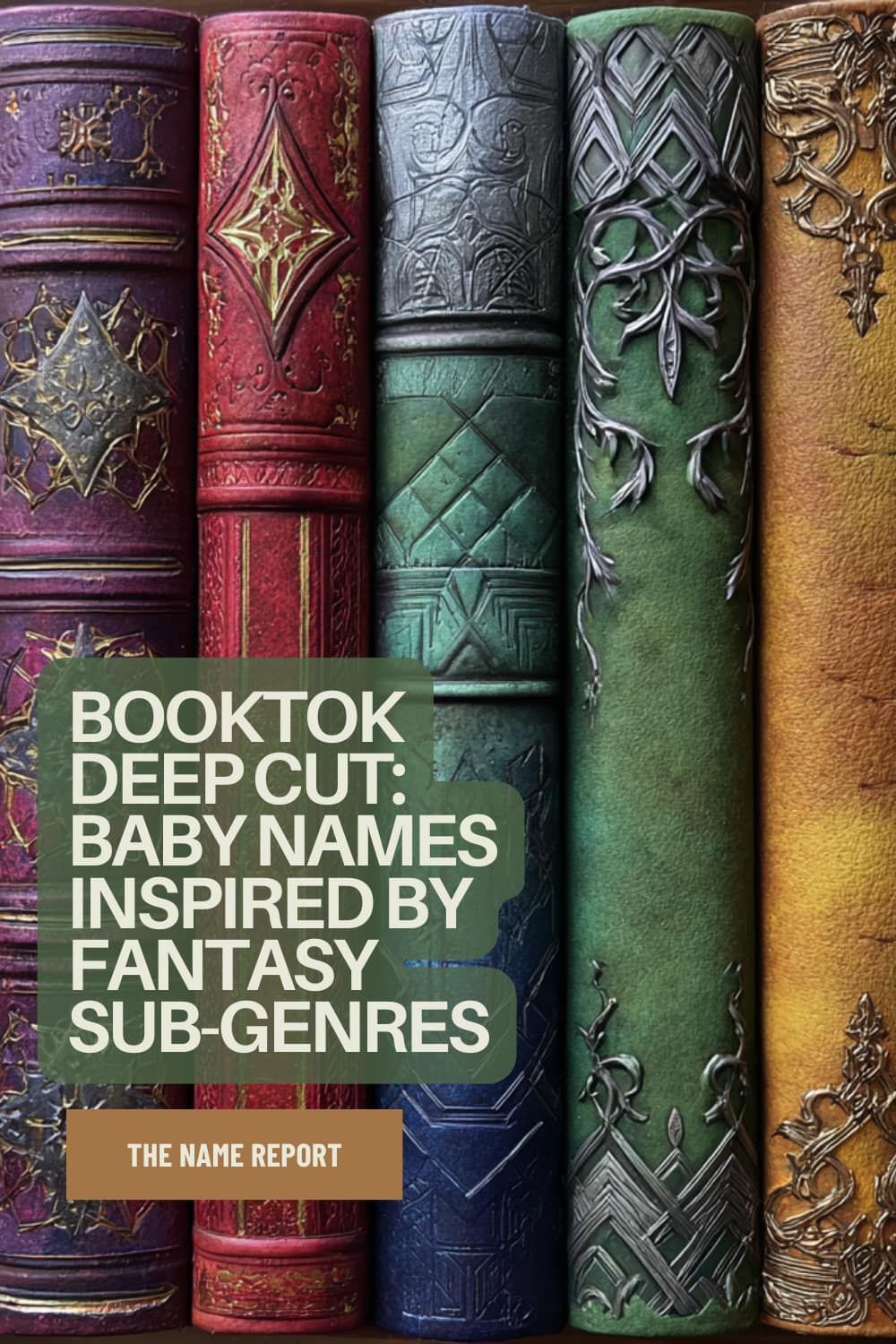
BookTok has a problem: it’s too successful at organizing itself. What started as readers sharing crying videos about dragons has become a sophisticated ecosystem of micro-genres, each with its own aesthetic, its own tropes, its own internal logic. And if you’ve been paying attention, you’ve noticed something: naming patterns cluster around these sub-genres in ways that actually reveal something true about taste and cultural values.
Romantasy was the obvious entry point. But that was 2023. Now readers (and the parents who read in communities) are thinking about dark romantasy, paranormal romance, gothic fantasy, historical fantasy, dark academia—each with its own naming philosophy. Each with its own way of signaling not just that you read, but what you read and what that says about how you see beauty.
This is the deep cut. This is where BookTok names move beyond pulling character names and start revealing something about narrative taste. About what kind of stories make you want to build a whole aesthetic around them.
Dark Romantasy: Names That Carry Moral Ambiguity
Dark romantasy is the sub-genre that refuses to apologize. It’s where the love interest is ethically complicated. Where power corrupts and beauty comes with teeth. The names here tend to have an edge—they’re not soft, but they’re not aggressive either. They’re knowing.
Nyx (NIX) — Latin, meaning “night.” Single syllable, sharp consonants, the kind of name that sounds like someone who makes choices you wouldn’t make but absolutely understand. Nyx is peak dark romantasy energy: it’s beautiful, it’s dark, and it signals that you get why sometimes the villain has a point. It pairs well with dark academia names because they share a certain intellectual darkness.
Kael (KAYL) — Gaelic, meaning “mighty warrior.” Two syllables, but both hard. Kael reads as dark romantasy because it has no softness built in. It’s a name for someone who loves hard and would burn down a kingdom for it. This is enemies-to-lovers energy without the softness.
Morana (mor-AH-nuh) — Slavic, goddess of death and winter. Three syllables but with weight throughout. Morana is for parents who read dark romantasy and understand that death magic and life magic aren’t opposites—they’re partners. It’s witchy without being precious, dark without being nihilistic.
Lysander (ly-SAN-der) — Greek, meaning “liberator.” The dark romantasy angle: Lysander is a name that sounds like someone who liberates through morally grey means. He’s not a good guy who does bad things. He’s someone where good and bad stop meaning anything because he’s operating on a different ethical system. It’s got intellectual weight without apology.
Ivy (IVY) — English, from the ivy plant. Short, sharp, with a certain poisonous elegance. Ivy works as dark romantasy energy because ivy itself is that aesthetic—creeping, persistent, beautiful in its way of choking out everything else. It’s botanical naming with genuine darkness built in.
Soren (SOR-en) — Danish/Scandinavian, meaning “stern, severe.” Dark romantasy parents love Scandinavian names because there’s something about that linguistic severity that pairs with moral complexity. Soren is for someone who will love you but it will cost you something. It’s a name that understands dark romantasy as a genre choice.
Gothic Fantasy: Names That Sound Like Velvet and Shadows
Gothic fantasy is the sub-genre where atmosphere is the plot. Where the setting is a character. Where beauty and decay coexist. The names here are ornate, but not in a saccharine way. They’re ornate the way a crumbling mansion is ornate—all detail and history and things growing in the corners.
Evangeline (ee-van-juh-LEEN) — Latin, meaning “good news.” Gothic fantasy flips this: Evangeline becomes a name with secret history, hidden meaning. There’s something old-money about it, something like soft maximalist names but darker. It’s ornate without being overdone. The kind of name attached to a woman who knows too much about the house’s history.
Dorian (DOR-ee-un) — Greek, originally meaning related to the Dorians. Gothic fantasy claims Dorian through association with The Picture of Dorian Gray—a novel about beauty, corruption, and the painting in the attic that ages instead of him. Any Dorian is implicitly gothic. It’s got literary weight that comes from specifically gothic literature.
Ophelia (oh-FEEL-yuh) — Greek, meaning “helper.” Borrowed from Shakespeare, but gothic fantasy made it theirs. Ophelia is the tragic girl, the one drowning, the one with flowers in her hair as she goes under. Gothic fantasy parents who choose Ophelia understand that beauty and doom are siblings. It’s got dark academia energy but specifically the version that ends badly.
Casper (KAS-per) — Persian, meaning “treasurer.” Gothic fantasy has reclaimed Casper from its friendly ghost associations. Casper in gothic fantasy is pale, aristocratic, haunted (literally or metaphorically). It sounds like someone who lives in the east wing and hasn’t been to the village in years. It’s got the refinement of names that sound expensive but with genuinely unsettling undertones.
Morrigan (MOR-ih-gun) — Irish, the warrior goddess of death and fate. Morrigan is gothic fantasy energy because it’s got mythology built in—there’s history, there’s darkness, there’s the sense that this name carries weight beyond the individual. She’s the girl in the gothic novel who you slowly realize has been dead for fifty years.
Historical Fantasy: Names That Anchor You in Time
Historical fantasy does something clever: it takes a real moment and says “but what if magic?” The names here ground you. They’re not invented. They’re chosen from actual history, which means they carry the weight of centuries. They feel substantial because they are substantial.
Beatrice (BEE-uh-triss) — Latin, meaning “bringer of joy.” Medieval Italian, Dante’s guide through the divine. Historical fantasy parents choose Beatrice because it is historical—it carries the weight of actual women who bore the name, actual moments in time. It’s not invented; it’s recovered. There’s something about names that age well that’s deepened by historical weight.
Atticus (AT-ih-kus) — Latin, meaning “of Attica.” Historical fantasy loves Atticus because it sounds like someone who could have existed in 1920s England or ancient Rome. It’s got literary weight (Atticus Finch) but also historical believability. The kind of name for someone who could have walked through an actual moment in time with magic.
Eleanor (EL-uh-nor) — Greek, meaning “light.” Eleanor of Aquitaine, Eleanor Roosevelt, multiple Eleanors throughout history. Historical fantasy parents choose Eleanor because it’s anchored in actual women who wielded actual power. It’s not invented aesthetic; it’s recovered history. Names with real substance get deeper when you know they belonged to actual queens.
Tristan (TRIS-tun) — Celtic, meaning “sad” (though modern interpretation is often “bold”). Arthurian legend, medieval romance, actual historical records with variations of this name. Tristan in historical fantasy is someone who could belong to multiple time periods. The kind of name that carries legend.
Margot (MAR-go) — French, meaning “pearl.” Medieval roots but modern simplicity. Historical fantasy parents love Margot because it feels both period-appropriate and contemporary. It’s the quiet luxury energy of someone who could have existed in multiple eras without seeming anachronistic.
Paranormal Romance: Names That Suggest Hidden Species
Paranormal romance is where humans meet something other: vampires, werewolves, fae, witches, shifters. The naming pattern here is interesting because it exists in this liminal space between human and mythological. Names that work for both sides.
Sienna (see-EN-uh) — Italian, the reddish-brown color. Paranormal romance parents love color names that suggest something other. There’s something about Sienna that suggests blood, earth, something elemental. It works as human but hints at something beneath. It’s got the color name energy without being literal about it.
Rowan (ROH-un) — Gaelic, meaning “little red one.” Rowan trees have mythology built in. In paranormal romance, Rowan works because it’s botanical enough to suggest fae heritage but human enough to be believable. It’s genuinely gender-neutral because paranormal romance doesn’t care about your gender—it cares if you’re human or not.
Kai (KY) — Hawaiian, meaning “sea.” Short, efficient, and in paranormal romance, it suggests something oceanic. Something with depth. Kai works for merfolk paranormal romance, for shifter paranormal romance, for any version where you need a name that feels connected to something other than human civilization. It’s beautifully unisex.
Sable (SAY-bul) — English, from the black fur. Paranormal romance claims Sable because it’s literally an animal name that works on humans. The black color, the darkness, the hint of something wild. It’s the perfect bridge between human and shifter. It’s got witchy energy without leaning into the costume version.
Lysander (ly-SAN-der) — We mentioned this in dark romantasy, but paranormal romance claims it too. Lysander as a vampire name, Lysander as a sorcerer. It’s got the linguistic sophistication to be either fully human or something ancient wearing human skin. This is multi-genre energy.
Dark Academia Fantasy: Names That Read Like Ancient Texts
Dark academia fantasy is the sub-genre where the setting is a prestigious institution and the magic is serious. The names here have that intellectual weight. They sound like they belong in old libraries, in footnotes, in the acknowledgments of occult texts.
Athena (uh-THEE-nuh) — Greek, goddess of wisdom. Dark academia fantasy reclaims Athena not as the generic goddess of wisdom but as someone who wins wars through intelligence and strategy. She’s ruthless about her knowledge. It’s got the literary weight of actual mythology plus the dark academia understanding that knowledge is power and power corrupts.
Sawyer (SAW-yur) — English occupational, originally “one who saws wood.” Dark academia loves Sawyer because it’s specific without being precious. It sounds like someone who could be either fully privileged or climbing her way into privilege through intellect. The name works in both directions.
Felix (FEE-liks) — Latin, meaning “happy, fortunate.” Dark academia claims Felix as the brilliant student who’s morally questionable. There’s something light about Felix that dark academia uses ironically—the happy name attached to someone doing deeply unhappy things in service of knowledge. It’s got that names with built-in complexity energy.
Delphine (del-FEEN) — Greek, meaning “from Delphi.” Connected to the Oracle, to prophecy, to knowledge that’s dangerous because it’s true. Dark academia fantasy parents love Delphine because it’s specific to ancient systems of power. She’s not just smart; she’s connected to something ancient.
Cozy Fantasy: Names That Feel Like Home
Cozy fantasy is the sub-genre that took dark academia and said “but what if it was actually nice?” It’s magical institutions but with found family instead of betrayal. The names here are warm, grounded, genuinely good.
Sophie (SO-fee) — Greek, meaning “wisdom.” Cozy fantasy claims Sophie because it’s wise without being pretentious. She’s the girl in the cozy fantasy who makes tea and knows things and helps people. It’s got the approachability of vanilla names but specifically in the context of magical warmth.
Oliver (AHL-iv-ur) — Latin, meaning “olive tree.” We mention Oliver in our vanilla names post, but cozy fantasy claims him as the kind boy who turns out to have magic and uses it to help. He’s got names with genuine substance but specifically the version that’s actively kind.
Matilda (muh-TILD-uh) — German, meaning “battle-mighty.” Cozy fantasy flips this: Matilda is battle-mighty but chooses hearth instead. It’s got the weight of names that mean warrior but specifically in a setting where that strength is used to protect found family rather than destroy enemies.
Jasper (JAS-pur) — English/Greek, a semi-precious stone. Cozy fantasy loves Jasper because it’s gentle without being weak. The stone itself is warm-colored, grounding. It’s got architectural baby name energy—clean lines and functional beauty.
Why Sub-Genres Matter for Naming
Here’s what’s interesting: parents naming with BookTok sub-genres in mind aren’t just choosing a character name. They’re choosing a narrative trajectory. They’re saying: this is the kind of story I believe in. This is the kind of world I want my child to inherit belief in.
If you choose a dark romantasy name, you’re saying yes to moral complexity. If you choose a cozy fantasy name, you’re saying yes to the idea that magic can be warm. If you choose a gothic fantasy name, you’re saying yes to the belief that beauty and darkness can coexist.
This is BookTok naming at its most sophisticated. Not just borrowing character names, but understanding that your naming choices signal something about what stories matter to you. About what worlds you want to be true.
And if you’re trying to understand which sub-genre speaks to your aesthetic—whether you’re drawn to dark romantasy’s moral complexity or cozy fantasy’s warmth—the Personalized Name Report can walk you through it. Because your taste in names is taste in stories. And understanding your story is the whole point.
Ready to find the name that matches your narrative?
Get a Personalized Name Report that reveals what your naming taste says about the stories that matter to you. Discover names from the sub-genres that actually speak to your aesthetic. Find Your Perfect Name